
Exactly What Do Pimple Patches Do When You Break Out?
If you have ever woken up with an angry red mountain on your chin right before a major event, you have probably desperately wondered exactly what do pimple patches do and if they actually work. Look, I get it. We have all been there. You stare at the mirror, contemplating terrible decisions involving your bare hands, hoping you can somehow squeeze the problem away without leaving a massive scar. Spoiler alert: that never works. These little hydrocolloid stickers aren’t just a trendy accessory you see all over social media; they are miniature, highly efficient healing environments designed to pull out impurities and stop you from destroying your face.
I remember being in Kyiv last winter when the freezing dry air and unbelievable work stress totally wrecked my skin barrier. My cheek decided to birth a subterranean volcano that throbbed every time I smiled. A good friend threw a tiny sheet of translucent dots at me across the coffee table. I was deeply skeptical, but sticking one on overnight totally flattened a massive blemish that threatened to ruin my entire week. It literally sucked the life out of the spot while I slept peacefully. The satisfaction of peeling it off the next morning and seeing all that opaque white gunk trapped in the adhesive was strangely glorious. That single experience sent me down a massive rabbit hole of skincare research.
So, the simple answer is that they act as a secondary skin. They form a protective seal over the wounded area, trap moisture in, keep outside bacteria out, and absorb excess fluid from the infection. But to truly appreciate the magic of these tiny stickers, you have to look at the mechanics behind them. They are so much more than just a piece of tape.
The Core Mechanics: Healing Blemishes Overnight
To grasp the true benefits of these stickers, you need to understand their primary material: hydrocolloid. Hydrocolloid is a moisture-retentive dressing that has been used in the medical field for decades. When applied to an active breakout, it creates an optimal moist environment. Why is moist healing better than letting a scab form? Because scabbing actually slows down the regeneration of skin cells and significantly increases the likelihood of hyperpigmentation and atrophic scarring. By keeping the area hydrated and protected, the skin can repair itself at an accelerated rate.
Here is a breakdown of the different types of stickers available right now and how they function:
| Type of Patch | Primary Key Ingredient | Best Use Case Scenario |
|---|---|---|
| Standard Hydrocolloid | Pure Hydrocolloid Polymer | Whiteheads that have come to a head or open blemishes. |
| Medicated Patches | Salicylic Acid or Tea Tree Oil | Early-stage red bumps that need inflammation reduction. |
| Microdart Technology | Hyaluronic Acid, Niacinamide, Peptides | Deep, cystic, blind spots that haven’t surfaced yet. |
The value proposition here is massive. First, they act as an impenetrable physical barrier. If you are a habitual skin picker, slapping a sticker on the spot physically prevents your fingernails from introducing dirt and bacteria into an open wound. Second, they act as a sponge. They aggressively absorb pus, oil, and cellular debris, drawing it safely away from the healthy tissue. You wake up with a flatter, significantly less inflamed spot.
If you want to maximize their effects, you need to follow a few strict protocols. You cannot just slap them on indiscriminately and expect a miracle. Here is exactly how to get the most out of them:
- Cleanse and Dry: Your skin must be absolutely stripped of oils and moisturizers where the sticker will go, or the adhesive will fail immediately.
- Time it Right: Apply the standard varieties only when you can see the white head of the blemish. If it is just a red bump, use a microdart version instead.
- Commit to the Clock: Leave the sticker entirely alone for a minimum of six to eight hours. Overnight application is always the most effective strategy.
- Gentle Removal: Do not rip it off like a band-aid. Wet the edges slightly if it is stuck too hard to prevent tearing the fragile newly healed skin underneath.
The Origins of Hydrocolloid Technology
The journey of hydrocolloid technology is genuinely fascinating. It did not start in high-end cosmetic labs or trendy beauty boutiques. Originally, hydrocolloid dressings were developed in the 1980s exclusively for severe medical applications. Hospitals utilized large, thick sheets of this moisture-absorbing material to treat chronic wounds, diabetic foot ulcers, and severe burn victims. The medical community loved hydrocolloids because they absorbed massive amounts of wound exudate while maintaining a sterile, moist environment that accelerated tissue regeneration. No one was thinking about using this heavy-duty medical supply for vanity purposes back then.
The Evolution from Hospitals to Skincare
The crossover from the emergency room to the bathroom cabinet happened organically, largely thanks to the incredible innovation of the South Korean beauty industry in the early 2010s. K-beauty chemists realized that acne is, fundamentally, a minor skin wound. If hydrocolloids could heal a massive ulcer by absorbing fluids and preventing scabs, they could theoretically do the exact same thing for a localized pustule. They took the thick medical sheets, thinned them out drastically, punched them into tiny, discrete circles, and packaged them for consumers. The results were explosive. Suddenly, people had a tangible, overnight fix for surface-level breakouts.
The Modern State of Blemish Care in 2026
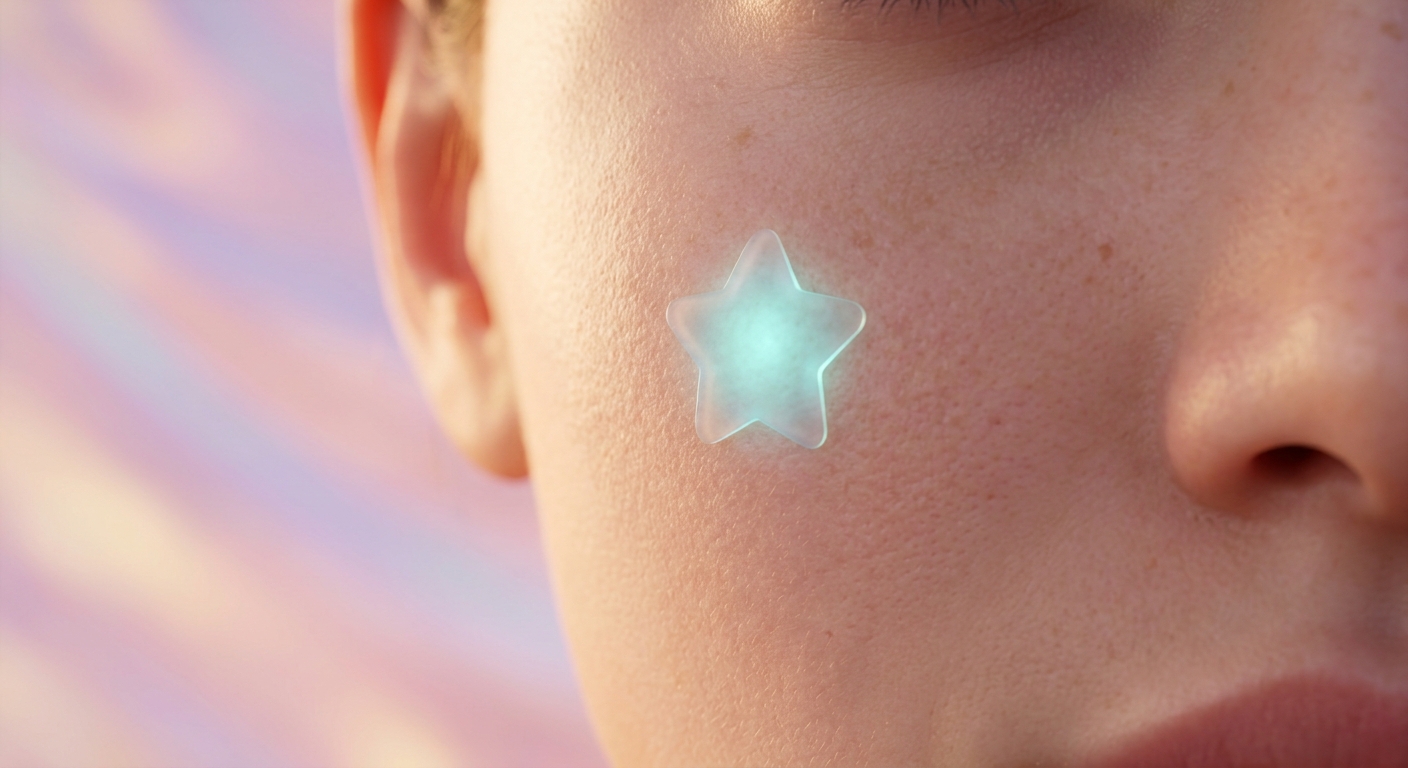
Fast forward to the year 2026, and the technology has evolved lightyears beyond simple fluid absorption. The current generation of stickers incorporates sophisticated delivery systems. We now have dissolvable microdarts that painlessly pierce the uppermost layer of the epidermis to deliver targeted doses of active ingredients directly into the heart of a cystic flare-up. We have ultra-thin, invisible shields designed specifically for daytime wear under heavy makeup. Brands are even producing them in fun, vibrant shapes like stars, hearts, and clouds, turning what used to be an embarrassing skin crisis into a bold fashion statement. The stigma of wearing an acne treatment in public has been entirely erased.
The Osmotic Pressure Phenomenon
To truly appreciate the science, we have to talk about osmotic pressure. Hydrocolloid contains gel-forming agents, such as pectin, gelatin, or sodium carboxymethylcellulose. When these polymers come into contact with the moisture oozing from a blemish (the exudate), they swell and turn into a gel. Because the concentration of water inside the sticker is lower than the concentration of fluid inside the swollen blemish, osmotic pressure forces the pus and oil to travel upward and outward into the dressing. This creates that highly satisfying, opaque white bubble you see when you remove it. The localized swelling goes down almost immediately because the physical mass of the infection has been safely extracted.
Active Ingredients and Skin Barrier Function
Beyond simple osmosis, medicated versions interact directly with your skin barrier. Salicylic acid, a beta-hydroxy acid, is lipophilic, meaning it can travel through the oil in your pores to dissolve the glue holding dead skin cells together. When infused into a sticker, the acid is trapped against the skin, forcing maximum absorption without evaporating. This targeted delivery protects the surrounding healthy tissue from unnecessary irritation.
- Fact 1: Hydrocolloid creates a hypoxic (low oxygen) environment, which ironically stimulates the formation of new blood vessels, speeding up the healing timeline.
- Fact 2: The acidic nature of the gel formed by the hydrocolloid lowers the pH of the wound site, inhibiting the growth of Propionibacterium acnes (the bacteria responsible for breakouts).
- Fact 3: Microdarts are typically made from crystallized hyaluronic acid that completely dissolves within two hours of application, releasing active compounds directly into the dermis.
- Fact 4: By physically blocking UV rays, many of these opaque stickers actively prevent the post-inflammatory hyperpigmentation (dark spots) that usually follow a severe breakout.
Step 1: Identify the Right Time to Apply
Timing is absolutely everything. If you apply a standard hydrocolloid to a deep, painful cyst that has no visible head, you are wasting your money. The skin is unbroken, and the sticker cannot absorb fluid through an intact epidermis. You must wait until the spot has formed a whitehead or has naturally popped. If you are dealing with a blind, under-the-skin bump, this is the moment to reach for a microdart variation infused with salicylic acid to bring the inflammation down.
Step 2: Cleanse and Completely Dry the Canvas
Adhesion requires a pristine surface. Wash your face with a gentle, non-stripping cleanser to remove makeup, sunscreen, and excess sebum. More importantly, you must let the area dry completely. Do not apply your toners, serums, or heavy moisturizers over the spot. If there is any slip or oil on the skin, the adhesive ring will fail, and it will fall off onto your pillow in the middle of the night.
Step 3: Select the Correct Patch Size
Size matters. You need a sticker that entirely covers the blemish with at least a two-millimeter border of healthy skin around it. If the sticker is too small, the fluid it absorbs will quickly reach the edges, breaking the adhesive seal and leaking out. Choose a slightly larger circle than you think you need to ensure the osmotic seal remains entirely airtight for the duration of the treatment.
Step 4: The Application Press-and-Hold Technique
Do not just tap it on and walk away. Peel the sticker off the plastic backing carefully, avoiding touching the sticky side with your fingers. Center it over the blemish and press down firmly. Hold your finger against the sticker for five to ten seconds. The natural heat from your fingertip helps mold the flexible hydrocolloid into the microscopic contours of your skin, ensuring a flush, totally invisible fit.
Step 5: Leave It Alone for Maximum Extraction
Patience is mandatory. The osmotic process is not instantaneous. It takes hours for the polymers to absorb the thick exudate. Go to sleep, read a book, watch a movie, or just go about your day. Aim for a minimum of six hours. You will know it is working when the center of the translucent circle turns opaque white and swells up slightly. That is the visual proof that the gunk is leaving your face.
Step 6: The Safe Removal Process
When you wake up, do not rip it off aggressively. If the blemish was open, aggressive removal can tear the fragile new skin cells that formed overnight, causing the wound to bleed and start the healing process all over again. Instead, grab one edge and pull it horizontally, stretching it parallel to your face like a Command Strip. This breaks the adhesive bond gently without pulling the skin upward.
Step 7: Post-Patch Aftercare and Healing
Once removed, assess the situation. If the spot is entirely flat and no longer weeping fluid, you are done. Wash your face and apply a soothing barrier repair cream containing ceramides or centella asiatica. If the spot is still raised and actively oozing, clean the area gently, dry it perfectly, and apply a fresh sticker to continue the extraction process for another few hours.
Myths vs. Reality: Clearing Up the Confusion
Myth: These stickers work exceptionally well for clearing up stubborn blackheads on your nose.
Reality: They are completely useless for blackheads. Blackheads are hard, oxidized plugs of sebum and keratin trapped deep in the pore. Hydrocolloid is designed to absorb liquid exudate, not hard, waxy plugs. You need chemical exfoliants for blackheads.
Myth: You should violently pop the blemish with your fingers before applying the sticker.
Reality: While it is true that hydrocolloid works best on an open wound, aggressively squeezing your skin causes massive trauma and pushes bacteria deeper into the dermis. If you must open it, use a sterilized diabetic lancet to create a microscopic exit wound safely.
Myth: Stronger, more aggressive adhesives mean better, faster results.
Reality: Overly sticky industrial-strength adhesives will literally rip the top layer of your skin off upon removal, leading to severe scabbing and hyperpigmentation. The gentle, medical-grade adhesion of a quality product is purposely designed to protect the stratum corneum.
Can I wear makeup over them?
Yes, absolutely. The ultra-thin, tapered-edge varieties are specifically designed for daytime wear. Apply the sticker to dry skin first, press it firmly, and then gently dab your concealer or foundation over the top using a damp beauty sponge. Do not rub, or you will lift the edges.
How long do I leave it on?
The sweet spot is between six and eight hours. Anything less than four hours usually isn’t enough time for the osmotic pressure to extract the fluid. Once the entire sticker turns opaque and white, it has reached its maximum absorption capacity and should be replaced.
Do they work on cystic acne?
Standard flat hydrocolloids do almost nothing for deep cysts because the fluid is trapped entirely under an unbroken layer of skin. For cystic acne, you must use the specialized microdart variations that contain active ingredients to penetrate the barrier and target the inflammation below.
Are they waterproof?
Most high-quality versions are water-resistant but not entirely waterproof. You can absolutely wash your face or take a quick shower with one on, and it should stay put. However, soaking in a hot tub or swimming for hours will eventually dissolve the adhesive bond.
Can I use them with salicylic acid?
If you are applying a standard non-medicated sticker, yes, but apply the acid to the rest of your face, not directly under the adhesive. If you trap a strong liquid exfoliant under an occlusive dressing, you risk chemical burns and severe irritation on that localized spot.
Do they expire?
Yes, they do have a shelf life. Most have an expiration date of two to three years from the date of manufacturing. Over time, the hydrocolloid polymers degrade, lose their moisture-absorbing properties, and the adhesive backing becomes brittle and completely ineffective.
Can I cut them in half?
You can cut the standard, uniform flat sheets to customize the size for oddly shaped breakouts. However, you should never cut the tapered-edge daytime stickers or the microdart versions, as doing so destroys the structural integrity and causes them to peel off prematurely.
The Final Verdict on Blemish Control
Now that you completely understand exactly what do pimple patches do, it is incredibly easy to see why they have become an absolute staple in modern 2026 skincare routines. They offer a sanitary, highly effective, and deeply satisfying way to manage breakouts without resorting to destructive picking or harsh, drying chemical pastes. They protect your skin barrier, accelerate natural healing, and dramatically reduce the risk of long-term scarring. Stop torturing your face with your fingernails. The next time you feel an unwelcome guest brewing on your chin, do your skin a massive favor: cleanse, dry, slap a sticker on it, and get some rest. Grab a pack today and take back control of your complexion!

Leave a Reply