

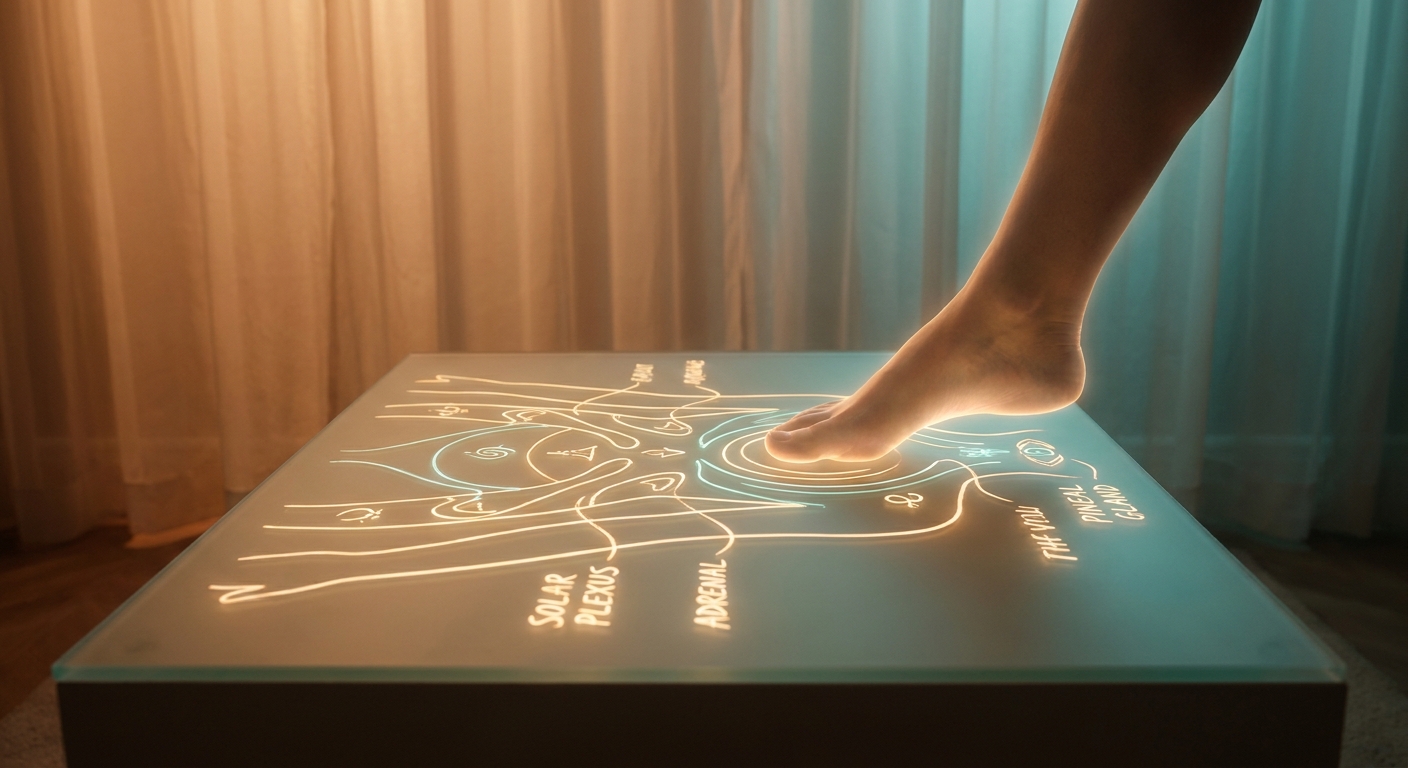
How to Read a reflexology foot chart Like a Pro
Grabbing a reflexology foot chart can honestly change how you handle daily stress. I know it sounds like a bold claim, but hear me out. A few years ago, living right in the heart of Kyiv, the winter cold was absolutely brutal. I spent hours standing at freezing bus stops, shivering so hard that my entire body would lock up into tight, painful knots. My grandmother noticed me wincing one evening and handed me a dog-eared, heavily folded map of the feet. She sat me down, pointed to specific zones on the paper, and showed me exactly where to press on my icy soles to warm up my core and release the tension trapped in my shoulders. Within minutes, a surprising wave of warmth spread through my chest, and the shivering stopped. By understanding the exact pressure points mapped out on your soles, you can send targeted healing signals to organs, muscles, and glands throughout your entire body. You do not need a medical degree or expensive spa treatments to figure this out. It is essentially a remote control for your nervous system, located right there at the bottom of your legs. We are going to break down exactly how you can use this map to fix everyday aches, improve your sleep quality, and simply feel better on a day-to-day basis. If you have been dragging yourself out of bed feeling exhausted, mapping your feet is the ultimate life hack you never knew you needed.
Understanding the mechanics behind the map is where the real magic happens. When you look at the layout, you are basically looking at a mirror image of the human body. The right foot corresponds to the right side of your body, and the left foot handles the left side. The true value here comes from the ability to bypass physical blockages. For example, if you have a stiff neck from staring at your phone all day, massaging the actual neck muscles might cause more inflammation. Instead, you can press the base of your toes—the corresponding zone—and stimulate blood flow to the neck without aggravating the actual tissue. Another great example is digestion. Feeling bloated after a heavy meal? You just work the center arch of your foot, stimulating the digestive organs to speed up the process.
| Foot Zone | Body Correspondence | Primary Benefit |
|---|---|---|
| Toes | Head, Brain, and Sinuses | Relieves tension headaches and clears severe nasal congestion |
| Ball of Foot | Heart, Chest, and Lungs | Improves breathing capacity, chest tension, and circulation |
| Arch | Digestive Organs (Stomach, Liver, Intestines) | Reduces bloating, cramps, and aids nutrient absorption |
| Heel | Pelvis, Sciatic Nerve, and Lower Back | Eases lower back pain, pelvic tension, and sciatic nerve flares |
To get the absolute most out of your session, you need to set the stage properly. Do not just start jabbing at your feet while watching a stressful news broadcast. You need a systematic approach to prepare your body for healing.
- Create a quiet environment: Turn off the television, play some soft background music, and make sure the room is comfortably warm. You want your nervous system to be in a highly receptive, relaxed state.
- Warm up the tissue: Soak your feet in warm water with a generous handful of Epsom salts for about ten minutes before you begin. This softens the skin, relaxes the superficial muscles, and draws out surface toxins.
- Use a guiding medium: Apply a few drops of natural lotion or jojoba oil. You want enough glide so you do not cause friction burns, but not so much that your thumbs slip off the targeted zones when you apply pressure.
- Breathe rhythmically: Sync your thumb pressure with your exhales. Pushing deeply into a zone while forcefully exhaling sends a profound, immediate relaxation signal directly to the brain.
Origins in Antiquity
Long before modern medicine mapped the human genome, ancient civilizations had already mapped the human foot. Evidence of foot therapy dates back thousands of years. The most famous historical record is found in Egypt, inside the tomb of Ankhmahor, widely known as the Physician’s Tomb, dating to around 2330 BC. The pictographs clearly show practitioners applying focused pressure to the hands and feet of patients. Similarly, ancient Chinese medicine developed complex theories around energy pathways, or Qi, which flowed through the body and terminated in the extremities. For these early healers, treating the foot was practically synonymous with treating the entire physical vessel. It was a holistic approach that recognized the interconnected nature of our biology long before microscopes could prove it. Indigenous tribes across North America also practiced forms of foot therapy, passing down techniques through generations to maintain health in harsh environments.
Evolution Across Continents
As trade routes opened up, these ancient practices migrated and merged. Fast forward to the early 20th century, and an American ear, nose, and throat specialist named Dr. William Fitzgerald introduced a concept he called Zone Therapy. He divided the body into ten longitudinal zones, running from the top of the head down to the tips of the toes. Dr. Fitzgerald discovered that applying pressure to a specific zone on the foot could create an anesthetic effect in the corresponding zone of the body, allowing for minor surgeries without chemical anesthesia. Eunice Ingham, a brilliant physiotherapist working in the 1930s, took Fitzgerald’s vertical zones and meticulously mapped the specific organs and glands to the soles of the feet. She is largely credited with creating the specific layout we recognize today. Her relentless mapping, traveling, and documentation turned a loose collection of folk remedies into a structured, teachable discipline that could be replicated globally.
Modern State of Reflexology
Now, as we navigate through 2026, the practice has shed a lot of its fringe, alternative stigma. You can find visual maps hanging in high-end sports medicine clinics, integrated into elite athletic recovery programs, and used as standard practice in corporate wellness retreats. People are exhausted by screens, overwhelmed by constant digital data, and looking for analog, touch-based methods to regulate their frantic nervous systems. The visual map serves as a highly accessible bridge between ancient wisdom and our desperate modern need for stress relief. It requires no electricity, no expensive monthly subscriptions, and no wi-fi—just your own hands, a comfortable chair, and a willingness to explore the intricate, deeply connected geography of your own soles.
The Neurological Connection
When you start pressing on specific spots on your soles, you are essentially hacking your nervous system. Our feet are packed with thousands of highly sensitive nerve endings—roughly 7,000 to 7,200 per foot. These nerve endings communicate directly with the spinal cord and the brain. When you apply firm, consistent pressure to a specific zone, you trigger a neurological reflex action. Think of it as sending an urgent text message up the spinal column to the brain, which then routes a response down to the corresponding organ or muscle group. This process heavily relies on proprioception, the body’s natural ability to sense movement, action, and location. By stimulating these distal nerve endings, you force the brain to check in on areas of the body it might have been ignoring due to chronic stress, trauma, or localized inflammation.
Fascia and Energy Pathways
Beyond just nerves, we have to talk about fascia—the connective tissue that wraps around every muscle and organ in the body like a tight, interwoven, three-dimensional web. Traditional Eastern medicine talks about meridians, which are essentially invisible energy highways. Interestingly, modern anatomy shows that these meridian lines closely track the body’s structural fascial planes. When fascia gets tight and restricted, it literally cuts off blood flow and nerve conductivity. Working the feet helps stretch and release this continuous web from the very bottom up. There is also the Gate Control Theory of Pain, which suggests that non-painful inputs close the neural gates to painful inputs. In simple terms, rubbing your foot sends a comforting signal that physically blocks the pain signals from reaching your brain.
- Endorphin Release: Targeted pressure stimulates the pituitary gland to release endorphins, which act as the body’s natural, highly potent painkillers.
- Improved Circulation: Micro-movements on the sole forcefully push stagnant blood back up the legs, massively aiding venous return to the heart and reducing swelling.
- Parasympathetic Activation: Deep pressure on the solar plexus point immediately shifts the body from a panicked fight or flight sympathetic state into a calm rest and digest parasympathetic state.
- Toxin Flushing: By specifically stimulating the kidney and lymphatic zones, the body is prompted to filter and excrete metabolic waste much faster.
- Neuropathy Support: Regular stimulation helps maintain nerve health and sensitivity, which is absolutely crucial for preventing balance issues and falls as we age.
If you want to genuinely experience the massive physical benefits, you need a highly systematic approach. Randomly poking your arches won’t cut it. Follow this strict 7-day protocol to systematically clear blockages and completely reset your body.
Day 1 – Mapping the Toes (Head and Neck)
We start at the very top of the body map. Your toes represent the head, brain, eyes, ears, and neck. Spend ten uninterrupted minutes exclusively pinching, squeezing, and rolling the tips and bases of your toes. This is absolutely phenomenal for clearing stubborn brain fog, reducing painful sinus pressure, and easing the stiff neck you got from sleeping weirdly. Focus specifically on the base of the big toe to release deep, chronic neck tension that causes tension headaches.
Day 2 – The Ball of the Foot (Chest and Lungs)
Moving down, the thick, padded area just below your toes correlates directly to your chest cavity, specifically your lungs and heart. Use your thumbs to make a slow caterpillar walking motion across this entire pad. If you feel slightly out of breath or carry a lot of heavy anxiety in your chest, this zone might feel highly sensitive or tender. Work it gently but firmly to encourage deeper, fuller breaths and improved oxygenation.
Day 3 – The Arch (Digestive System)
The large, soft arch of your foot is the main control center for your entire digestive tract. The upper arch handles the stomach, pancreas, and liver, while the lower arch manages the small and large intestines. If you suffer from indigestion, acid reflux, or irregularity, apply firm, circular pressure here. Moving your thumbs from the outer edge toward the inner edge helps mechanically stimulate natural peristalsis in the gut.
Day 4 – The Heel (Pelvis and Lower Back)
The dense, tough skin of the heel exactly corresponds to the pelvic region, the sciatic nerve, and the lower back. Because the skin is much thicker here, you can use the hard knuckles of your hands to apply much deeper pressure. This is an absolute game-changer if you sit at a desk all day and suffer from lower back stiffness or sharp, shooting sciatic twinges down your legs.
Day 5 – Inner Edge (Spine Alignment)
The inside curve of your foot, running from the side of the big toe all the way down to the inner heel, perfectly mirrors the natural curve of your spine. Walk your thumb slowly down this bony ridge. You will likely feel little crunchy spots under the skin. Spend extra time gently massaging these crystals out; they often correspond to tight, locked vertebrae in your actual back.
Day 6 – Outer Edge (Shoulders and Arms)
The outside edge of the foot connects to the outer edges of your body—your shoulders, arms, elbows, and knees. If you carry heavy stress in your shoulders, press firmly along the notch just below the pinky toe. It often feels quite tender but provides massive, almost instant relief to hunched, overworked shoulder muscles.
Day 7 – Full Integration Session
On the final day, you put it all together. Spend twenty minutes doing a full, comprehensive sweep. Start at the toes and methodically work your way down to the heel, spending about two to three minutes on each major zone. You are now treating the body as a whole, completely connected organism, ensuring vital energy flows freely from head to toe without interruption.
Myth: It is just a regular foot massage that smells nice.
Reality: While deeply relaxing, a proper session uses very specific micro-movements—like thumb-walking—to target exact nerve endings, rather than just broadly rubbing muscle tissue to relieve local soreness.
Myth: A session can cure chronic diseases instantly.
Reality: It is an incredibly powerful complementary therapy. It strongly supports the body’s natural healing mechanisms, drastically reduces stress, and improves circulation, but it is not a direct replacement for acute medical care.
Myth: It always hurts, and if it does not hurt, it is not working.
Reality: Some specific points might feel slightly tender or crunchy if there is an energy blockage, but the pressure should never cause sharp, unbearable pain. Discomfort should feel like a good hurt that releases tension.
Myth: You need expensive professional tools to get real results.
Reality: Your own two thumbs, patience, and a reliable reference map are the only tools you actually require to see significant, life-changing benefits.
Myth: The results are purely the placebo effect.
Reality: Functional MRI scans have actually shown that pressing specific zones on the foot undeniably lights up the corresponding areas in the brain, proving a measurable, undeniable neurological link.
How often should I use the chart?
For general wellness and maintenance, twice a week is perfect. If you are dealing with acute stress, poor sleep, or a specific physical issue, ten minutes of daily targeted work yields the absolute best results.
Can I do this on myself?
Absolutely. While having someone else do it is incredibly relaxing, working on your own feet gives you immediate, highly accurate biofeedback on exactly how much pressure to apply to tender spots.
What is the best time of day?
Right before bed is heavily recommended. The massive parasympathetic activation practically guarantees a much deeper, more restorative, and uninterrupted sleep cycle.
Do I need lotion or oil?
It is recommended to use a tiny drop of natural lotion to prevent skin friction, but strictly avoid using too much, or your thumbs will simply slide right off the specific pressure points.
Are there any side effects?
Some people experience temporarily increased urination, mild fatigue, or slight emotional release as the body actively flushes toxins and processes deeply stored tension.
Can pregnant women do this?
Yes, but with extreme caution. Certain pressure points around the ankles and heels are historically thought to stimulate uterine contractions, so it is strictly best to consult a professional practitioner during pregnancy.
How quickly will I feel results?
Most people feel a profound, heavy sense of overall relaxation within the first five minutes, while chronic issues may take a few weeks of consistent, dedicated practice to permanently shift.
Is it safe for children?
Yes! Children generally respond beautifully to gentle pressure. It is a highly effective, natural tool to help them calm their nervous systems down right before bedtime.
Do I need to wash my feet first?
Hygiene is always appreciated, but a warm soak actively helps to soften the tough fascia, making your entire session significantly more effective and comfortable.
What if I press the wrong spot?
You literally cannot harm yourself by pressing the wrong area. The absolute worst that happens is you send a relaxing, beneficial signal to an organ that did not strictly need it at the moment.
In the high-speed, demanding environment of 2026, finding a reliable, grounded way to manage your health is absolutely crucial. Utilizing a visual map of your soles is highly empowering, incredibly effective, and completely free. Start your 7-day protocol tonight, listen closely to your body’s feedback, and experience the profound physical benefits of targeted touch. Bookmark this guide, share it immediately with a friend who is always stressed out, and take full control of your natural wellness journey today!

Leave a Reply