

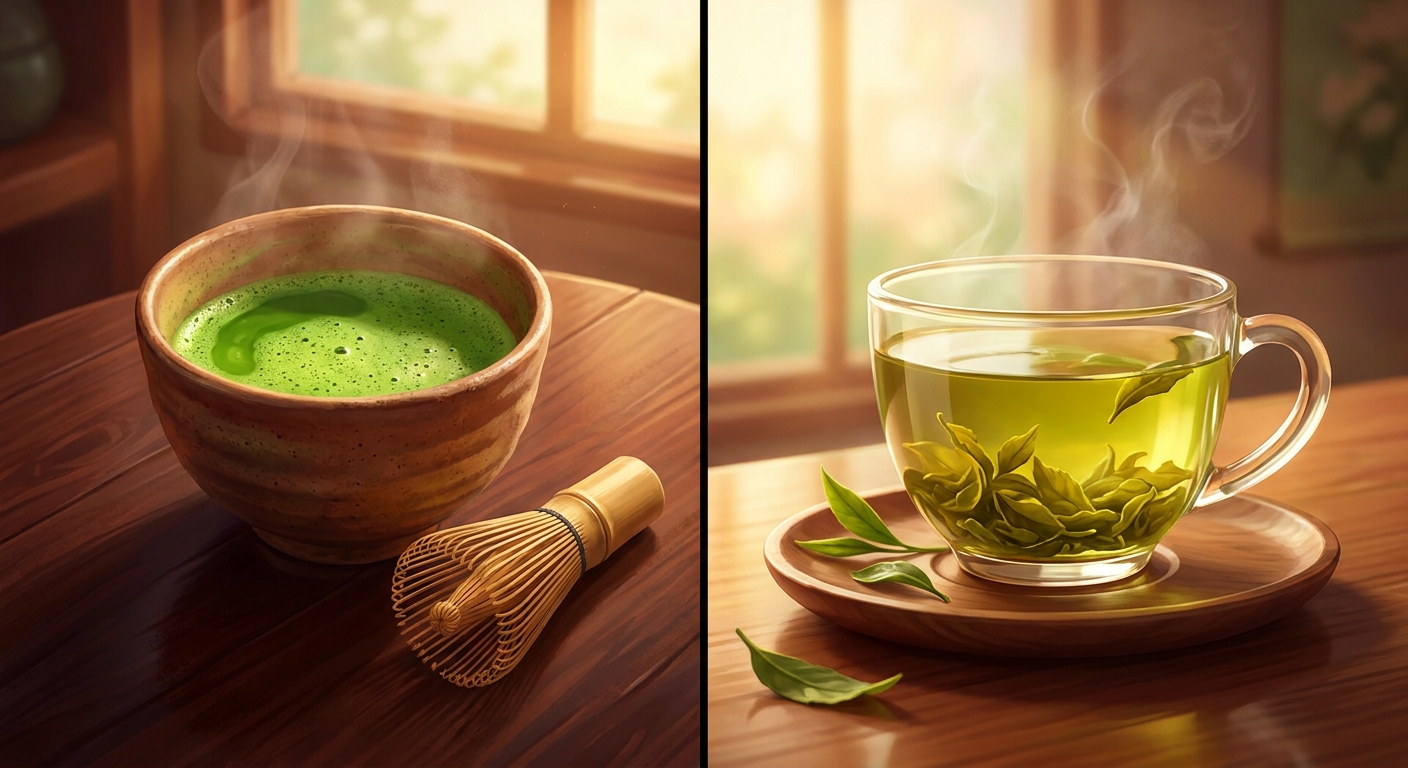
The Honest Truth About Matcha vs Green Tea
Let me tell you straight up about matcha vs green tea because I know exactly how confusing that coffee shop menu gets when you just want a decent, jitter-free morning boost. Last week, I was sitting in my favorite little café near Podil in Kyiv. It was a freezing morning, and I was chatting with Oksana, my absolute favorite barista. She poured me a vibrant, incredibly frothy green bowl and laughed as a customer next to me asked if it was just pulverized tea bags. Honestly, most people think these two drinks are exactly the same thing, just packaged in different formats. But as Oksana handed me my cup, it hit me how vastly different they really are. While both originate from the exact same plant, Camellia sinensis, they are completely different beasts in how they are grown, how you prepare them, and most importantly, how they make you feel. My goal right now is to break down exactly what makes them unique, saving you time, money, and bad tasting cups. By the end of this, you will know exactly which brew fits your lifestyle, and you will have a solid plan to integrate the best elements of both into your daily routine without overcomplicating things.
The Core Breakdown: What Actually Separates Them?
To really grasp the difference, you need to understand one massive concept: when you drink regular green tea, you are essentially drinking water infused with the essence of the leaves. When you drink matcha, you are consuming the entire actual leaf. That single fact changes the entire nutritional profile, the caffeine hit, and the texture.
Here is a direct comparison to make things extremely clear for you:
| Feature | Matcha Powder | Traditional Green Tea |
|---|---|---|
| Cultivation Method | Shade-grown for weeks before harvest to boost chlorophyll. | Grown entirely in direct sunlight until plucked. |
| Consumption Style | Suspended in water; you ingest the whole ground leaf. | Steeped in hot water; the leaves are thrown away. |
| Caffeine & Energy | High caffeine, but sustained release over 4-6 hours. | Moderate caffeine, lighter and more subtle energy curve. |
The value you get from switching up your tea routine is massive. Think about sustained energy without the 2 PM crash. For example, if you replace your second cup of coffee with a bowl of high-grade matcha, you get a solid hit of focus without the heart palpitations. Another huge example is immune support; drinking steeped sencha in the afternoon hydrates you while providing a gentle antioxidant push that won’t ruin your sleep.
If you want to know if you are getting the good stuff, follow these three rules:
- Check the color immediately: High-quality matcha should look like neon, vibrant spring grass. If it looks dull, yellowish, or military olive green, it is low-quality or old.
- Feel the texture: Good powder feels like fine talc or baby powder. Steeping leaves should be intact, tightly rolled, and never look like dusty broken fragments.
- Taste the umami: Premium Japanese green teas have a savory, almost broth-like sweetness. If your face puckers from harsh bitterness, you either bought a bad batch or you used boiling water instead of warm water.
The Ancient Origins
The story of these drinks goes way back to Tang Dynasty China. Back then, they used to steam tea leaves, pack them into tight bricks, and roast them. When it was time to drink, they would break off a piece of the brick and grind it into a fine powder. This was the earliest precursor to what we now call matcha, though it tasted vastly different from the smooth, bright cups we enjoy today. Regular loose leaf teas evolved alongside this, becoming the standard daily beverage across various Asian regions due to how easy it was to simply toss leaves into hot water.
The Evolution of Cultivation
Things shifted drastically when a Japanese Buddhist monk named Myoan Eisai brought seeds and the powdered tea preparation method from China to Japan in the 12th century. The Japanese refined the process intensely. They discovered that by shading the tea plants before harvest, the plant would panic and overproduce chlorophyll and amino acids, trying to capture whatever sunlight it could. This shading technique is what gives modern matcha its intense umami flavor and brilliant color. Meanwhile, sun-grown green teas like Sencha became the everyday staple for the general public, prized for their refreshing, crisp profiles.
The Modern State of Tea Culture
Fast forward to the year 2026, and tea culture has exploded globally. You can walk into almost any café from Tokyo to London to Kyiv and find both options on the menu. But we have also seen a lot of bastardization of the traditions. You will find matcha crammed into overly sugary frappes, baked goods, and even skincare. Despite this commercialization, the pure, traditional art of brewing a simple cup of sencha or whisking a ceremonial bowl of matcha remains a grounding, quiet ritual that millions of people use to find a moment of peace during their chaotic days.
The Chemistry of L-Theanine
Let me explain exactly why you feel so good after drinking these teas. The secret weapon here is an amino acid called L-Theanine. Because matcha is shaded from the sun, it retains an incredibly high concentration of this compound. When you consume L-Theanine alongside caffeine, it acts as a chemical moderator. It crosses the blood-brain barrier and stimulates alpha brain waves, which are associated with a state of relaxed alertness. You get the drive and focus from the caffeine, but the L-Theanine smooths out the spike, preventing the jittery, anxious feeling coffee often gives you.
Catechins and Cellular Health
Then we have the antioxidant side of things, specifically a catechin known as EGCG (Epigallocatechin gallate). EGCG is a powerhouse when it comes to defending your cells against oxidative stress. Because you are ingesting the entire leaf with matcha, the concentration of these catechins is significantly higher than when you just steep leaves in water and throw them away.
- Matcha can contain up to 137 times more EGCG than standard, low-grade bagged green tea.
- The caffeine in green tea binds to catechins, resulting in a slow release into the bloodstream over several hours.
- Consuming the whole leaf provides trace amounts of dietary fiber, vitamins A, C, and K, which steeped tea lacks.
- The high chlorophyll content from shade-growing acts as a natural, mild detoxifier for the body.
- Regular consumption has been scientifically linked to improved endothelial function, helping with blood flow and heart health.
Your 7-Day Tea Mastery Plan
I know all this information is a lot to process, so I built a dead-simple, 7-day protocol for you to test out both drinks and see exactly how your body reacts. Stick to this, and you will find your perfect routine.
Day 1: The Baseline Sencha
Start your week by brewing a high-quality loose-leaf Sencha in the mid-morning. Use water around 75°C (167°F) so you do not burn the leaves. Notice how light and refreshing the energy feels. It is the perfect gentle start to gauge your caffeine sensitivity.
Day 2: Introduction to Culinary Matcha
Today, we are using the stronger, more robust culinary grade powder. Do not drink it straight. Blend a teaspoon into a morning smoothie with a banana, some spinach, and almond milk. This gives you a massive antioxidant hit while masking any earthy bitterness.
Day 3: The Iced Gyokuro
Gyokuro is a premium shaded green tea (like matcha, but left whole). Cold brew it overnight in the fridge. Drink it on Day 3 afternoon. The cold extraction pulls out pure, sweet umami flavors without any astringency. It is wildly refreshing.
Day 4: Ceremonial Grade Morning
It is time for the real deal. Get some high-quality ceremonial grade matcha. Sift exactly 2 grams into a bowl, add about 60ml of 80°C (176°F) water, and use a bamboo whisk in a W-motion until a thick foam forms. Drink it on an empty stomach and feel the intense, focused energy peak over the next hour.
Day 5: The Pre-Workout Matcha
Instead of artificial pre-workout powders, whisk a quick shot of matcha 30 minutes before the gym. The sustained caffeine and L-theanine will give you incredible mind-muscle connection and endurance without the post-workout crash.
Day 6: Afternoon Bancha
Bancha is a type of green tea harvested later in the season. It has slightly lower caffeine levels. Brew a pot around 3 PM. It will give you just enough of a lift to finish your workday strong, but won’t interfere with your ability to sleep tonight.
Day 7: The Ultimate Hybrid Blend
Today, you mix the worlds. Brew a strong shot of ceremonial matcha and pour it over iced oat milk, then add a splash of lightly steeped jasmine green tea syrup for floral notes. You have officially mastered the spectrum of flavors and energy profiles.
Myths vs Reality
I hear a ton of nonsense about these teas, so let me clear up the biggest misunderstandings right now.
Myth: Matcha is naturally bitter and tastes like dirt.
Reality: High-grade ceremonial powder is actually naturally sweet, creamy, and savory. If yours is bitter, you either bought cheap culinary grade meant for baking, or you scorched the powder with boiling water.
Myth: Both teas have the exact same caffeine content.
Reality: Because you consume the entire ground leaf, matcha contains about three times as much caffeine as a standard cup of steeped green tea.
Myth: Green tea is a magical weight-loss pill.
Reality: While catechins do slightly boost metabolic rate, drinking tea won’t cancel out a bad diet. It is a fantastic health supplement, not a miracle cure.
Myth: You can just use a metal spoon to mix matcha.
Reality: A spoon will just push dry clumps around. You absolutely need a bamboo whisk (chasen) or an electric milk frother to suspend the powder properly.
Frequently Asked Questions
Can I drink matcha every single day?
Yes, absolutely. Most daily drinkers stick to 1-2 bowls a day. Just be mindful of your total caffeine intake, especially if you also drink coffee, as the alkaloids can add up quickly and cause restlessness.
Does green tea break a fasting window?
No, plain steeped green tea and plain water-whisked matcha have basically zero calories. They will not spike your insulin and are completely safe to consume during a fast. In fact, they help suppress appetite.
Why is ceremonial matcha so incredibly expensive?
The labor involved is intense. The plants are hand-shaded for up to four weeks, the youngest leaves are hand-picked, the stems and veins are painstakingly removed, and the remaining leaf is slowly ground in granite stone mills. You are paying for intense craftsmanship.
Can I make it without a bamboo whisk?
You can, though it is not ideal. If you do not have a chasen, your best bet is a battery-powered milk frother or putting the powder and warm water into a sealed thermos and shaking it violently for 30 seconds.
Does adding milk ruin the antioxidants?
There is some debate here. Casein proteins in cow’s milk can bind to catechins and slightly reduce their absorption. If you want maximum health benefits, drink it with water or use a plant-based milk like oat or almond.
Is it safe for pregnant women?
Generally, pregnant women are advised to limit caffeine to 200mg a day. One bowl of matcha has about 70mg. So yes, in moderation, but you should always run it by your doctor first.
When is the absolute best time to drink it?
The sweet spot is mid-morning, around 9:30 AM or 10:00 AM, after you have had some water and breakfast. Drinking it on a completely empty, acidic stomach first thing in the morning can make some people feel slightly nauseous.
How should I store my premium tea powder?
Oxygen, heat, and light are the enemies. Keep it in an airtight tin inside your refrigerator. Once you open a fresh tin, try to consume it within two months before it loses its vibrant color and flavor.
Does green tea expire?
It doesn’t spoil like milk, but it definitely goes stale. Stale tea loses its aromatic oils and antioxidants, resulting in a flat, cardboard-like taste. Always check the harvest date when buying.
So, there you have it. You are now fully equipped to navigate the world of these incredible Japanese and Chinese teas. Whether you choose the deep, intense focus of a whisked bowl or the light, refreshing hydration of steeped leaves, you are making a massive upgrade to your daily health. Don’t just read about this—go order a high-quality tin right now, try out Day 1 of the mastery plan tomorrow morning, and see how much better your body feels!

Leave a Reply