

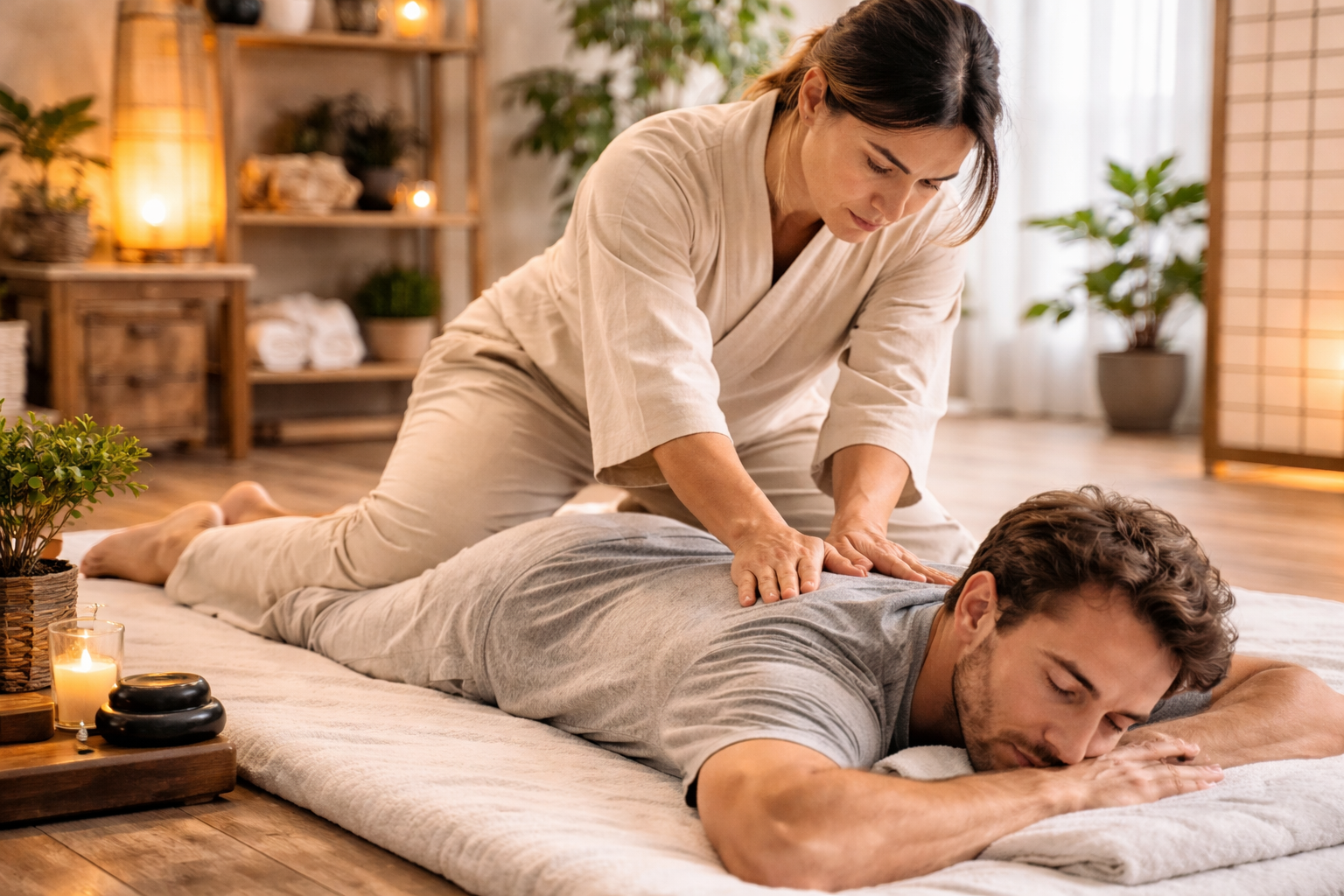
If you’ve heard the term shiatsu massage and pictured something halfway between a spa treatment, stretching session, and pressure-point ritual, you’re not completely off. But you’re probably not fully right either. Shiatsu is one of those wellness words people recognize before they actually understand it. It sounds familiar. It sounds calming. It sounds maybe a little mysterious. Then you get to the appointment and realize this is not just “regular massage, but more zen.”
That’s part of why people search it. They want to know what they’re actually walking into.
Shiatsu massage is generally described as a form of bodywork that uses finger pressure, palm pressure, and sometimes stretching or joint movement to work through the body in a structured way. It’s often done fully clothed, usually without oil, and often on a mat or low table instead of the more familiar face-down spa setup. So right away, the vibe is different. Less slip-and-glide. More grounded pressure. More pause. More rhythm.
And honestly, that difference is what makes it interesting. Some people love shiatsu because it feels intentional without being overly fussy. Others try it once and realize they were expecting Swedish massage in sweatpants and got something more focused, quieter, and more physical in a different way. Neither reaction is wrong. It just means expectations matter.
This guide is here to make the whole thing clearer. What shiatsu massage is, what happens during a session, what people usually hope it will help with, where the evidence is still mixed, and when it may not be the smartest choice without checking with a healthcare professional first. Not the hype version. The useful version.
What shiatsu massage actually is
The word “shiatsu” is commonly translated as “finger pressure,” and that gives you a decent starting point. In practice, shiatsu usually involves steady pressure applied through the fingers, thumbs, palms, and sometimes elbows or forearms, plus stretching, rocking, and guided body positioning. It’s often linked to traditional East Asian bodywork ideas, especially pressure along specific pathways or points, though the way practitioners explain it can vary a lot depending on training style.
That last part matters. Not every shiatsu practitioner talks about it the same way. Some lean hard into traditional concepts like energy flow and meridians. Others talk more in bodywork language: tension, posture, movement, stress regulation, muscle guarding, and nervous system downshift. A client doesn’t always need to pick sides in that debate. But it helps to know the framing can vary.
What tends to stay consistent is the style of contact. Shiatsu is usually more still and deliberate than many Western massage styles. The practitioner often sinks into pressure and holds it instead of constantly moving across the skin. It can feel very calming, very specific, or, depending on the spot, a little intense in that “oh wow, you found it” kind of way.
- It’s usually done through clothing
- It often uses pressure more than oil-based gliding
- It may include stretches and gentle joint movement
- It often feels more structured than a relaxation-only massage
That’s the basic shape of it. Not magical. Not random. Just a distinctive style of hands-on bodywork with its own rhythm.
What a shiatsu session feels like
This is what people really want to know. Does it hurt? Is it relaxing? Do you have to undress? Do you lie still the whole time? Is it like acupuncture without needles? Kind of? Not exactly? You can see why the internet gets messy here.
A typical shiatsu session is usually done with you fully clothed in comfortable, stretchy clothes. Think soft pants, a T-shirt, maybe layers you can move in. Jeans are not your friend here. The session may happen on a floor mat, futon, or massage table. The practitioner may begin with simple questions about tension, pain, stress, sleep, posture, digestion, or whatever brought you in. Then the hands-on part starts.
The pressure is usually steady rather than slippery. The practitioner may lean into certain spots and hold pressure for a few seconds, then move to the next area. They may also guide your arms or legs through stretches, gently rotate joints, rock the body, or work along the back, hips, shoulders, neck, or legs in a pattern that feels less random than some spa massage styles.
Some people feel deeply relaxed during shiatsu. Others feel more aware than sleepy. That’s normal too. Shiatsu can be calming without being dreamy. It can make you notice your body rather than forget it.
| Part of the session | What it often involves | What it may feel like |
|---|---|---|
| Assessment | Questions about symptoms, stress, tension, goals | Brief and conversational |
| Pressure work | Thumb, palm, finger, or forearm pressure | Grounded, steady, sometimes intense but not sharp |
| Stretching | Gentle guided movement of limbs or torso | Opening, loosening, sometimes surprisingly helpful |
| Rocking or mobilization | Small movements to ease tension or help relaxation | Soothing and rhythmic |
| After-effects | A few minutes of adjustment after the session | Relaxed, lighter, a bit sore, or pleasantly tired |
One useful thing to know: shiatsu is not supposed to be a silent endurance test. If the pressure feels too strong, say so. If you hate having your neck worked on, say so. If a stretch feels wrong, say so. Good bodywork is not mind reading. Communication makes it better.
Shiatsu massage vs the massage most people picture
When Americans hear “massage,” many picture a lotion-or-oil session on a table, usually Swedish or deep tissue, with long strokes across bare skin. Shiatsu doesn’t usually look like that. It feels more like a conversation through pressure than a full-body glide.
That doesn’t make one better than the other. It just makes them different tools. Some people want the melt-into-the-table feeling. Others want something that feels more targeted and less slippery, more like organized pressure and guided release. Shiatsu often fits that second category.
Here’s the practical difference:
- Swedish massage often focuses on flowing strokes and relaxation
- Deep tissue often targets deeper muscle tension through sustained pressure
- Shiatsu often emphasizes clothed pressure, positioning, and structured bodywork patterns
And yes, these categories overlap in real life. Therapists borrow ideas. Sessions get adapted. Humans are messy. But as a broad feel, that breakdown helps.
What people usually seek shiatsu massage for
Most people don’t book shiatsu because they’re chasing a theoretical concept. They book it because something feels tight, off, wound up, achy, restless, or just too much. The reasons are usually very human.
Common reasons people try shiatsu include:
- Stress and mental overload
- Neck and shoulder tension
- Low-back discomfort
- General stiffness
- Feeling “stuck” after long desk days
- Wanting a calmer body without a very spa-like format
Some people also try it because they like acupressure-style ideas but don’t want needles. Others just like being able to keep their clothes on and avoid the whole oil-and-sheet setup. That may sound minor, but comfort with the format matters more than wellness culture likes to admit.
And here’s the honest part: many people seek shiatsu for relief, not cure. That distinction is important. Relief is a reasonable goal. Cure is where a lot of massage-related marketing starts getting silly.
What the evidence actually says
This is where things need a little honesty. Massage in general has been studied for several pain and stress-related conditions, but the quality of evidence is often mixed, and shiatsu specifically is not backed by giant, crystal-clear, slam-dunk clinical evidence for every claim people make about it. That doesn’t mean it’s useless. It means it’s better framed as a supportive, symptom-management option than a proven fix for specific diseases. :contentReference[oaicite:1]{index=1}
NCCIH’s broader massage overview says massage has been studied for pain conditions like low-back pain, neck and shoulder pain, knee osteoarthritis, and headaches. But the evidence for low-back pain, for example, is described as weak or low-strength, and the research often doesn’t show that one massage style clearly beats another. So if someone tells you shiatsu is the one true answer for chronic pain, that claim is moving faster than the evidence does. :contentReference[oaicite:2]{index=2}
That said, there’s a real-world nuance here. People don’t only seek massage because of trial outcomes. They also seek it because it helps them feel looser, calmer, more connected to their body, or less clenched after stressful weeks. Those are real experiences, even when the research language stays cautious.
So the fairest summary is this:
| Claim | Best honest take |
|---|---|
| Shiatsu can help people relax | Very plausible and commonly reported |
| Shiatsu may ease some muscle tightness and stress | Reasonable, especially as a supportive therapy |
| Shiatsu is a proven cure for chronic pain disorders | No, that overstates the evidence |
| Shiatsu is worth trying if you like pressure-based bodywork | Often yes, if it’s safe for you and your expectations are realistic |
Honestly, that’s enough. A lot of wellness practices would improve overnight if they just stayed inside that level of honesty.
Why some people love it and others bounce off it
Shiatsu has a very particular feel. If you like grounded pressure, slower pacing, and a session that feels almost meditative without being passive, it can be a great fit. If you want lots of oil, long flowing strokes, and the sensation of being rubbed into another dimension, you may leave thinking, “That was good, but not what I meant by massage.”
And that’s okay. Bodywork is personal. One person’s ideal pressure is another person’s instant nope.
People who often like shiatsu tend to appreciate:
- Clothed sessions
- Structured pressure instead of lots of gliding
- Stretching and joint movement mixed into bodywork
- A more grounded, less spa-like feel
People who may not love it as much often prefer softer relaxation styles or don’t enjoy sustained pressure. Neither group is “right.” It’s just a fit issue, like music or mattress firmness or whether you think sparkling water tastes refreshing or hostile.
What to wear and how to prepare
This part is easy but useful. Wear soft, breathable clothes you can move in. Yoga pants, sweatpants, shorts, a T-shirt, a light long-sleeve top — that sort of thing. Avoid anything stiff, restrictive, or weirdly decorative. This is not the time for complicated belts or hard seams.
Try not to arrive overly full from a heavy meal. Hydrate normally. Show up a little early if you can, especially for your first session, so you’re not rolling in stressed and breathless and then expecting the therapist to reverse physics in fifty minutes.
Before the session, it helps to know your own goal. Not a huge emotional thesis. Just something simple like:
- “My shoulders and neck are constantly tight.”
- “I want stress relief more than pain relief.”
- “My low back gets cranky after desk work.”
- “I’m curious, but I don’t love really intense pressure.”
That last one is especially helpful. Therapists can adjust a lot if you tell them early enough.
When to be cautious or skip it
This is the part that wellness articles sometimes bury because it ruins the dreamy mood. But it matters. Massage is not automatically a good idea in every body at every moment. Mayo’s medical massage precautions list several situations where massage may need modification, clearance, or avoidance, including blood-clotting disorders, blood-thinning medications, unhealed fractures, open wounds, deep vein thrombosis, uncontrolled high blood pressure, and some other active medical problems. :contentReference[oaicite:3]{index=3}
That doesn’t mean massage is dangerous in general. It means common sense still exists.
You should be especially careful or get medical guidance first if you have:
- A blood-clotting disorder or you take blood thinners
- Open wounds, burns, or skin infections
- A possible DVT or unexplained swelling in a limb
- An unhealed fracture or recent major injury
- Uncontrolled high blood pressure
- Active cancer treatment or other significant medical complexity
- Pregnancy with any concerns about pressure, positioning, or symptoms
This is also why it helps to choose a licensed or certified therapist and actually tell them about your medical history. Massage is not improved by secrecy.
Can shiatsu make you sore afterward?
Yes, sometimes. Not always, but sometimes. Especially if the pressure was stronger than your body wanted, or if the therapist worked into areas that were already tight and cranky. Cleveland Clinic notes that post-massage soreness can happen and suggests things like hydration, gentle stretching, heat, and rest to settle it down. :contentReference[oaicite:4]{index=4}
The key difference is between mild, temporary soreness and “this feels wrong.” A little muscle tenderness the next day is one thing. Sharp pain, bruising, dizziness, or symptoms that genuinely worry you are another. If you feel worse in a way that seems off, don’t just tell yourself it means the massage “worked.” That myth needs retirement.
And next time, tell the therapist sooner. More pressure is not always better pressure.
How to choose a shiatsu therapist without getting weird about it
You do not need to conduct a doctoral defense. But you should ask a few normal grown-up questions. Mayo’s massage safety advice recommends looking for a licensed or certified massage therapist and telling them about your medical conditions and special care needs. That’s a good baseline. :contentReference[oaicite:5]{index=5}
Practical things to ask include:
- Are you licensed or certified in this state?
- Do you specifically practice shiatsu, or just occasionally use shiatsu-style pressure?
- How do you adapt sessions for people who are sensitive to pressure?
- Have you worked with clients who have my particular issue?
You can also read the room, literally. Does the practitioner explain things clearly? Do they ask about your goals and health history? Do they respond normally when you say you don’t like intense neck work or that your low back is touchy? Competence often shows up in simple ways.
FAQ
What is shiatsu massage?
Shiatsu massage is a style of bodywork that usually uses finger, thumb, palm, or forearm pressure, often through clothing, along with stretching and gentle movement.
Do you take your clothes off for shiatsu?
No, usually not. Shiatsu is commonly done fully clothed, which is one reason some people prefer it over more traditional oil-based massage styles.
Does shiatsu massage hurt?
It shouldn’t feel sharp or wrong, but some pressure points can feel intense. A good session should be adjustable, so it’s important to speak up if the pressure is too much.
What is shiatsu massage good for?
People often use it for stress relief, muscle tightness, general stiffness, and relaxation. It may help some symptoms, but it should not be treated as a cure-all.
Is shiatsu the same as deep tissue massage?
No. Both can involve firm pressure, but shiatsu is usually more structured, more clothed, and more focused on steady pressure and positioning than oil-based deep tissue work.
Can you feel sore after shiatsu massage?
Yes, mild soreness can happen, especially after stronger pressure. But severe pain, bruising, or feeling clearly unwell afterward should not be brushed off.
Who should avoid shiatsu massage or check with a doctor first?
People with blood-clotting problems, blood-thinner use, unhealed fractures, open wounds, DVT risk, uncontrolled high blood pressure, or other major medical issues should get medical advice first.
Conclusion
Shiatsu massage makes more sense once you stop trying to fit it into the wrong box. It isn’t just spa massage with a Japanese name, and it isn’t some mystical shortcut either. It’s a structured style of pressure-based bodywork that many people find calming, grounding, and physically helpful in a practical way.
The best reason to try it is not because someone promised it will transform your life. It’s because you’re curious about a massage style that uses steady pressure, stretching, and a more clothed, less oil-heavy format — and that sounds like it might suit you.
The best way to try it is with realistic expectations, a qualified therapist, and enough common sense to speak up about pressure, discomfort, or medical issues that matter. That part may not sound glamorous, but it’s what makes the experience better.
And honestly, that’s true of most bodywork. The right session doesn’t need to be magical. It just needs to meet your body where it is and leave you feeling a little less wound up than when you walked in.

Leave a Reply