
Nits vs Dandruff: Recognizing the Root of Your Scalp Trouble
Spotting white flakes scattered throughout your hair or your child’s hair can trigger immediate panic. Understanding the fundamental differences between nits vs dandruff is absolutely crucial for addressing the problem quickly and effectively without unnecessary anxiety. When you are staring at tiny white specks clinging to hair shafts, your mind usually jumps straight to a lice infestation, but a dry, flaky scalp is often the true culprit. The thesis here is straightforward: knowing exactly what is shedding from or attaching to your hair dictates the treatment path you must take. Misdiagnosing the issue leads to wasted money, damaged hair from unnecessary chemical treatments, and lingering discomfort. By thoroughly examining the physical characteristics, behavioral patterns, and environmental factors surrounding these two distinct scalp conditions, you can confidently identify the issue. This guide breaks down the visual cues, the underlying science, and the most effective strategies to clear your scalp and restore your peace of mind. We will explore everything from immediate identification techniques to long-term prevention protocols, ensuring you never have to second-guess those tiny white specks again.
The Core Differences in Symptoms and Behavior
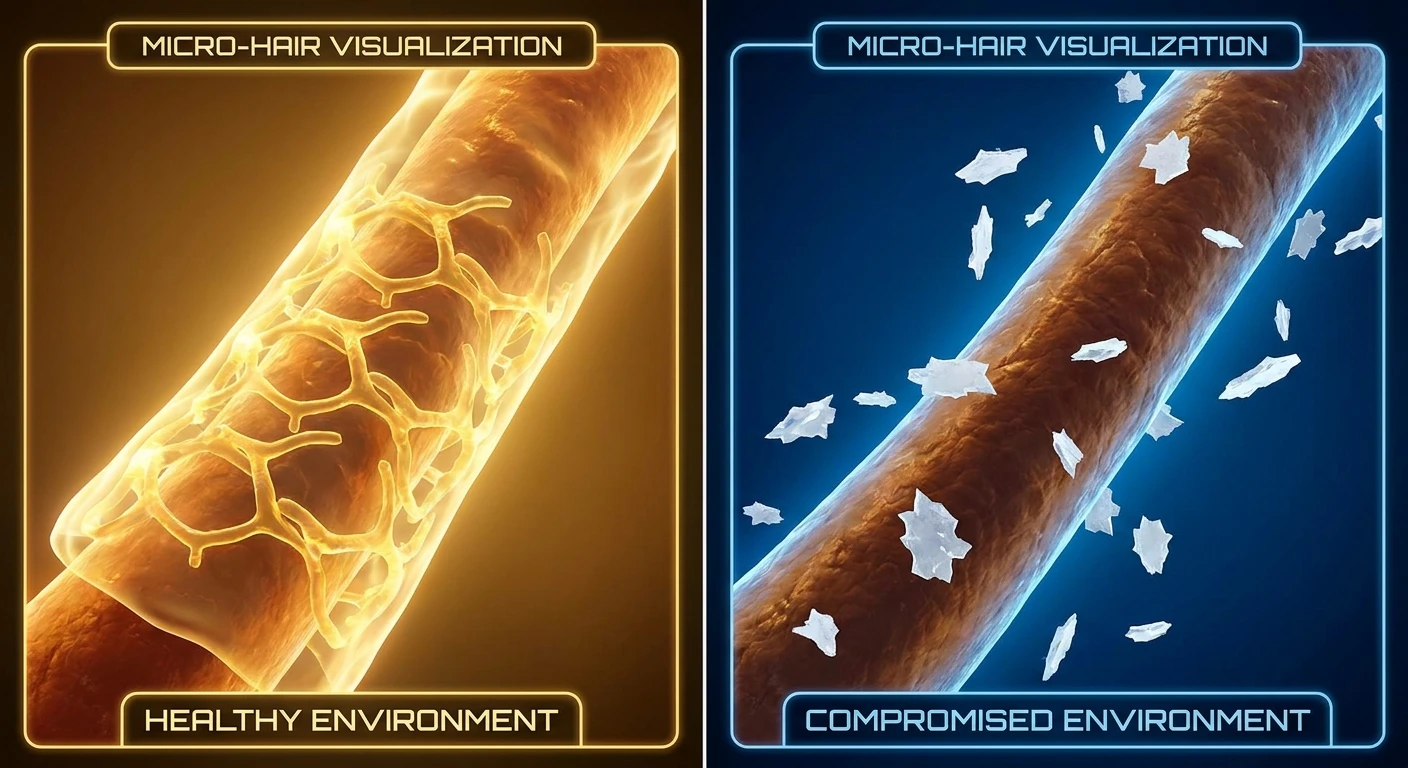
Nits and dandruff might look similar to the naked eye, but they behave in entirely different ways. Nits are the eggs of head lice, laid directly by the adult female louse. She secretes a specialized, glue-like substance that cements the egg to the hair shaft, usually within a quarter-inch of the warm scalp. This means a nit is stubbornly anchored in place. You cannot simply brush it away or wash it out with standard shampoo. Dandruff, conversely, is a condition characterized by the accelerated shedding of dead skin cells from the scalp. These flakes of skin are entirely loose. They fall onto the shoulders, shift when you run a hand through the hair, and easily wash away down the drain.
Read also: Why Did I Get My Period Twice In One Month? Expert Answers; Face Fungus: Causes, Symptoms, and Proven Treatments.
Here is a clear breakdown of the symptoms to help you distinguish between the two:
| Characteristic | Nits (Lice Eggs) | Dandruff (Seborrheic Dermatitis) |
|---|---|---|
| Location | Firmly glued to one side of the hair shaft, near the scalp. | Loose on the scalp, falling freely through the hair and onto clothing. |
| Color & Shape | Teardrop-shaped; yellowish, tan, or brown before hatching; clear or white after. | Irregular, flat flakes; bright white or slightly yellowish and oily. |
| Movement | Immovable. Requires fingernails or a fine-tooth comb to slide off. | Easily falls or brushes out of the hair with light friction. |
Understanding this value proposition is massive. Accurately diagnosing the issue saves you from two major headaches. For example, if you correctly identify dandruff, you avoid subjecting your scalp to harsh, stripping insecticidal shampoos that would only make the dryness and flaking worse. Alternatively, if you catch nits early, you can stop a full-blown lice infestation in your household before it spreads to siblings, parents, and classmates.
Here are three definitive steps to check your hair right now:
- Section the hair under a very bright, direct light, preferably natural sunlight or an LED lamp, so you can clearly see the texture of the specks.
- Isolate a single hair strand with a speck on it and try to flick it away with your finger. If it moves easily, it is a skin flake; if it holds tight, it is likely an egg.
- Inspect the scalp itself for redness, irritation, or the presence of actual live, crawling insects, which confirms an infestation rather than a dermatological condition.
The Origins of Scalp Conditions
Humans have battled itchy scalps for thousands of years, long before modern dermatology existed. Archaeological evidence shows that our ancestors struggled heavily with both parasitic infestations and dermatological skin conditions. In fact, exquisitely crafted wooden and bone lice combs have been discovered in ancient Egyptian tombs, complete with the microscopic remains of ancient nits still trapped between the teeth. Ancient texts also describe persistent flaky scalp conditions, often attributing them to imbalances in the body’s humors or poor environmental conditions. The confusion between an egg and a skin flake is a historical constant, troubling parents and healers across early civilizations.
The Evolution of Treatments
As human understanding of biology grew, so did the sophistication of our remedies. Early treatments for nits involved smothering the hair in thick oils, animal fats, or kerosene—a dangerous and highly toxic home remedy that persisted well into the 20th century. For dandruff, early treatments were often coal tar-based soaps, which were highly effective at slowing down rapid skin cell turnover but left an incredibly pungent odor. The mid-20th century saw a boom in synthetic chemical treatments. Permethrin emerged as the gold standard for eradicating lice and their eggs, while active ingredients like zinc pyrithione and ketoconazole revolutionized the way we handle fungal-induced skin flaking.
The Modern State of Hair Care
Today, the approach to scalp health is highly specialized. We now face modern challenges, such as the rise of super lice—strains of head lice that have genetically mutated to resist standard over-the-counter permethrin treatments. This has shifted the focus back toward meticulous manual nit-combing and newer, non-toxic suffocation agents like dimethicone. In the realm of dandruff, modern science focuses heavily on the scalp microbiome. Dermatologists now understand that aggressive washing can strip the scalp of natural oils, exacerbating the problem. Today’s treatments aim to balance the natural flora of the scalp, targeting the specific yeast responsible for the flaking without destroying the skin’s natural moisture barrier.
The Biology of Nits and Lice Attachment
To truly understand a nit, you have to look at it at a microscopic level. The human head louse, known scientifically as Pediculus humanus capitis, has evolved alongside humans for millennia. When a female louse lays an egg, she does not just drop it onto the scalp. She extrudes a highly specialized, protein-based liquid from her reproductive organs. This liquid surrounds the hair shaft and the base of the egg, rapidly hardening into a sheath of chitin-like cement. This glandular cement is remarkably similar in molecular structure to the keratin that makes up human hair. Because the chemical structures are so alike, it is incredibly difficult to develop a solvent that dissolves the nit glue without also dissolving or severely damaging the hair shaft itself. This is why mechanical removal—physically sliding the egg off the hair—remains the most effective elimination method.
The Pathogenesis of Dandruff and Fungal Activity
Dandruff is not caused by poor hygiene, but rather by a complex interaction between your skin’s sebum and a naturally occurring, single-celled microbe called Malassezia globosa. This yeast lives on the scalps of most healthy adults. However, in some individuals, the immune system overreacts to the yeast’s presence. The yeast feeds on the specific lipids in your sebum, breaking them down and leaving behind a byproduct called oleic acid. The oleic acid penetrates the top layer of the epidermis and triggers an inflammatory response.
Here are the hard scientific facts driving these conditions:
- The gestation period of a nit is strictly 8 to 9 days, meaning you have a short window to remove them before they hatch into nymphs and begin feeding on blood.
- Dandruff fundamentally alters the skin’s life cycle; a normal epidermal turnover rate takes about 28 days, but a dandruff-prone scalp sheds its cells in roughly 14 days, causing cells to clump together into visible flakes.
- Lice cannot survive off a human host for more than 24 to 48 hours, whereas the yeast responsible for dandruff is a permanent resident of the human microbiome.
Day 1: The Initial Assessment and Identification
Your first step is purely diagnostic. Gather a bright lamp, a magnifying glass, and a fine-toothed comb. Seat yourself or the affected person in a well-lit area. Section the hair into small, manageable grids. Look closely at the nape of the neck and behind the ears, which are prime real estate for lice. Perform the flick test on any suspicious specks. Do not apply any products yet; you need an accurate baseline observation.
Day 2: Selecting the Proper Treatment Protocol
Based on Day 1, make your purchase. If the specks are glued tight, you are dealing with nits. Purchase a high-quality, metal micro-grooved lice comb and a dimethicone-based lice treatment. If the specks easily flake off and the scalp looks dry or oily, purchase a clinical-strength anti-dandruff shampoo containing ketoconazole, salicylic acid, or selenium sulfide.
Day 3: Application and Environmental Cleaning
Apply your chosen treatment strictly following the manufacturer’s directions. For nits, this means fully saturating dry hair with the lice treatment and letting it sit to suffocate active bugs. While the treatment sits, strip all bed linens, pillowcases, and recently worn clothing, washing them in hot water. For dandruff, massage the medicated shampoo into the scalp and leave it for five minutes before rinsing.
Day 4: The Follow-Up Comb or Scalp Massage
If treating nits, Day 4 requires a meticulous comb-through. Wet the hair, apply generous amounts of standard hair conditioner to slow down any surviving bugs, and comb every single section from root to tip, wiping the comb on a white paper towel after every pass. For dandruff, use a silicone scalp massager in the shower to gently exfoliate dead skin buildup without scratching or breaking the skin.
Day 5: Hydration and Moisture Barrier Repair
Both lice treatments and medicated dandruff shampoos are incredibly harsh on the scalp. Dedicate Day 5 to moisture repair. Apply a soothing aloe vera gel, a lightweight squalane oil, or a hydrating scalp serum to the roots. Restoring the skin’s lipid barrier is crucial for preventing the overproduction of oil that feeds dandruff yeast, and it helps heal the microscopic bite wounds left by lice.
Day 6: Secondary Inspection for Surviving Specks
Return to the bright light. If you were fighting nits, you are looking for any microscopic eggs you missed that may have matured. A single missed female nit can restart the entire infestation cycle. If you are battling dandruff, evaluate the level of flaking. You should notice a significant reduction in loose white specks and a decrease in itchiness.
Day 7: Establishing a Long-Term Prevention Routine
Your final day is about setting up a sustainable future. For lice prevention, introduce a tea tree or rosemary oil preventative spray into your morning routine before school or work. For dandruff control, establish a rotation schedule: use your medicated shampoo once or twice a week, and a gentle, sulfate-free cleanser on the other days to maintain microbiome balance.
Myths vs Realities
Myth: Having dandruff means you do not wash your hair enough and are dirty.
Reality: Dandruff is a complex microbiome and inflammatory issue, not a sign of poor hygiene. In fact, over-washing can strip the scalp of essential moisture, causing the skin to produce even more oil and paradoxically worsening the dandruff condition.
Myth: Nits and adult lice can jump or fly from one person’s head to another.
Reality: Lice do not have wings and their legs are not built for jumping. They only spread through direct head-to-head contact or the sharing of heavily infested personal items. Nits are completely inanimate and cannot move at all.
Myth: Washing your hair with scalding hot water will kill both nits and dandruff.
Reality: Extremely hot water severely damages the scalp’s moisture barrier, leading to severe dryness and worsening dandruff flakes. Furthermore, the temperature required to instantly kill lice or nits would cause severe third-degree burns to human skin.
Myth: You can catch nits from your family dog or cat.
Reality: Head lice are obligate human parasites. They cannot survive on the blood or body heat of household pets. Your furry friends are completely safe from human head lice.
Can nits look like dandruff?
Yes, at first glance, nits look like tiny white or yellowish flakes, making them easily confusable with dandruff. The primary difference lies in how they react to movement; nits stick tight, while dandruff falls away.
Does dandruff itch more than nits?
Both conditions cause intense, maddening itching. However, dandruff itching is caused by dry, inflamed skin, while the itching associated with nits is actually an allergic reaction to the saliva of the live lice feeding on the scalp.
Can you have both conditions at the same time?
Absolutely. It is entirely possible to suffer from a dry, flaky scalp while simultaneously dealing with a lice infestation. In fact, the harsh chemicals used to kill lice often trigger temporary dandruff.
Will regular daily shampoo wash out nits?
No. The glue that holds the egg to the hair shaft is highly water-resistant and immune to the detergents found in everyday commercial shampoos.
Are nits themselves contagious?
The eggs cannot move, jump, or crawl, so a nit alone cannot transfer to another person. However, the presence of nits strongly indicates that active, reproducing adult lice are present, which are highly contagious.
How fast does dandruff come back after treatment?
If the underlying fungal imbalance or dryness is not properly managed with a routine, dandruff can return within just a few days of stopping the use of a medicated shampoo.
Should I keep my child home from school?
For dandruff, absolutely not. It is a non-contagious skin condition. For nits, you must follow your specific school district’s policy. Many schools maintain a strict no-nit policy, requiring complete removal before the student can return to the classroom.
In conclusion, distinguishing between nits vs dandruff does not have to be a nightmare of guesswork. By understanding the visual cues—namely the glue-like attachment of an egg versus the loose, flaky nature of dry skin—you can take immediate, effective action. Armed with the science of how these conditions operate and a solid 7-day action plan, you have total control over your scalp health. Do not wait for the itching to get worse. Grab a fine-tooth comb, find a bright light, and inspect your scalp right now to reclaim your comfort!

Leave a Reply