

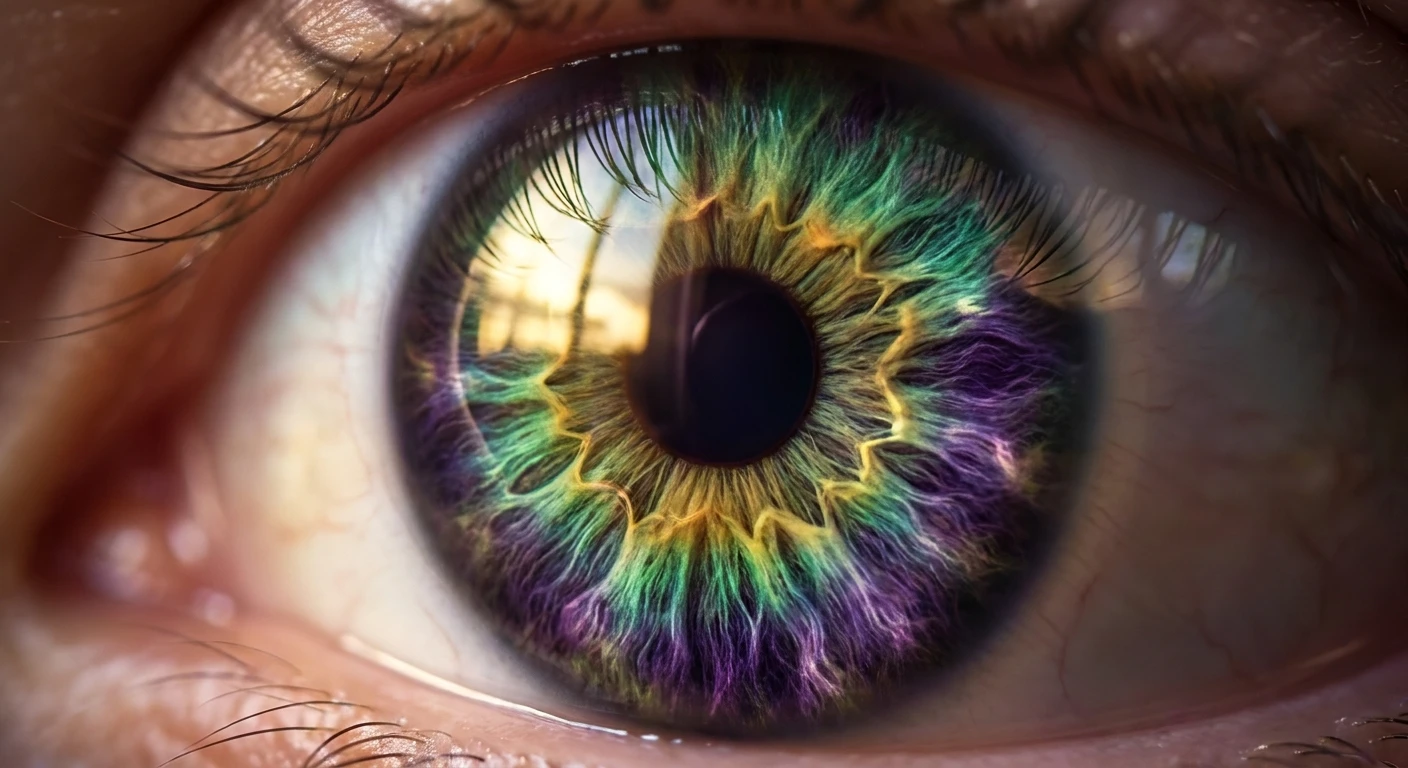
The Fascination Surrounding a Rare Eye Color
Have you ever met someone and immediately noticed they have a remarkably rare eye color that you just cannot stop looking at? You might be wondering what exactly determines these unique shades and why they captivate our attention instantly. The truth is, human eye pigmentation is an incredible genetic lottery. Most of the global population has dark brown eyes, which makes anything outside that standard spectrum feel highly unusual and visually striking. Having a unique iris shade is much more than a simple aesthetic trait. It is a fascinating biological footprint left behind by your ancestors from thousands of years ago, carrying complex stories of human migration, survival, and adaptation over countless generations. The precise amount and distribution of melanin in your iris dictate whether you end up with deep espresso brown, piercing ice blue, vivid emerald green, or even a striking violet hue. People often forget that our eyes do not actually contain physical colored pigments for shades like blue or green. Instead, the way natural light scatters across the microscopic fibers of the iris creates these beautiful, dynamic optical illusions. When you look deeply into someone’s bright blue eyes, you are actually observing scattered light waves bouncing back at you. Understanding the science and genetics behind these captivating shades gives us a clear, factual look into human biological diversity and how complex genetics play out in our everyday lives. This guide breaks down the actual physical mechanics of iris pigmentation, traces the deep history of human eye colors across centuries, explains the strict scientific realities behind melanin production, and outlines exactly how you can identify and visually accentuate your own distinct features for maximum impact.
Understanding the intricate structure of a rare eye color requires looking closely at the actual physical layers of the iris. The human iris is incredibly complex. The front layer, known as the stroma, and the back layer, called the epithelium, work together in perfect harmony to absorb and reflect incoming light. When someone has an abundance of melanin heavily packed in the stroma, their eyes absorb a massive amount of light, resulting in a rich, dark brown appearance that looks almost solid. But when that melanin is incredibly scarce, light enters the eye and bounces around the fibrous tissue of the stroma, creating lighter, much more unusual shades that seem to change depending on the room’s lighting.
Read also: Best Pickled Beets Benefits for Your Daily Diet; What is the difference between diet and zero sugar?.
| Eye Color Type | Global Population Percentage | Key Genetic and Physical Characteristics |
|---|---|---|
| Pure Green | Approximately 2 percent | Very low melanin combined with a yellowish lipochrome pigment and Rayleigh scattering. |
| Silver or Gray | Roughly 3 percent | Almost zero melanin with significantly larger collagen deposits in the stroma causing even light scattering. |
| Amber | About 5 percent | Strong, dominant presence of a yellow-colored pigment called lipochrome, creating a solid golden or copper hue. |
Knowing your specific tone offers a major value proposition for your personal style and daily non-verbal communication. When you lock eyes with someone, your iris color is often the very first thing they register. Once you understand the specific underlying tones of your iris, you can make strategic styling choices that make your eyes incredibly striking and impossible to ignore. For instance, wearing warm, earthy tones like terracotta, burnt orange, and mustard yellow makes the golden flecks in amber eyes pop beautifully against the contrast. Alternatively, utilizing cool silver, charcoal, or deep plum clothing drastically intensifies the icy, steely nature of gray eyes, creating a piercing, highly memorable look that stands out in professional and social settings alike.
If you want to properly identify the exact shade and pattern of your eyes, you need to follow a highly precise evaluation method.
- Assess the lighting accurately: Natural, indirect sunlight is the absolute only way to accurately view the true hue and intricate structural patterns of your iris without artificial yellow incandescent bulbs or harsh blue fluorescent lights skewing the visual results. Stand near a bright window for the best assessment.
- Look closely for heterochromia: Notice if you have a distinct central ring of a completely different color immediately surrounding the pupil, or if there are random, beautiful flecks of gold and rust scattered organically across the iris fibers.
- Check the outer limbal ring: The thick, dark circle around the absolute outer edge of the iris can create a powerful optical illusion, making the inner color appear much brighter, sharper, and rarer than it actually is upon closer, isolated inspection.
By taking the time to truly observe these microscopic details, you learn exactly what makes your facial features completely unique.
Origins of Human Pigmentation
When we look far back into human history, the baseline for our species was completely uniform. Every single early human had brown eyes. This heavy dark pigmentation was an absolute biological necessity for survival in bright, hot, sun-drenched environments near the equator. High levels of melanin provided essential, thick protection for the retina against intense ultraviolet radiation and harsh sunlight glare. This natural biological shield prevented serious ocular damage, stopped early blindness, and helped our early ancestors thrive in extreme weather conditions. There was virtually zero variation in eye color for hundreds of thousands of years, meaning a rare eye color simply did not exist during the earliest chapters of human existence. Everyone shared the exact same ocular traits.
Evolution Across Diverse Climates
As human populations began migrating away from the equator and actively moving into cooler, cloudier northern latitudes across Europe and Asia, the strict biological need for heavy melanin began to slowly decrease. Around six to ten thousand years ago, a massive, unprecedented genetic shift occurred in the Black Sea region. A highly specific genetic mutation randomly affected a gene that controlled melanin production. This mutation did not turn off melanin completely, but it severely limited its production strictly within the iris. Suddenly, individuals began being born with pale blue eyes. In these darker, less sunny northern climates, having lighter eyes and skin actually provided a strong survival advantage by allowing the human body to synthesize Vitamin D much more efficiently during long, dark, brutal winters.
Modern State of Genetics
Fast forward to our current modern era, and global travel has completely shaken up the genetic distribution of eye color worldwide. Because people constantly move and form diverse families across continents effortlessly, we are seeing genetic combinations today that were historically impossible. The complex genes dictating eye shades are continually mixing, creating a modern landscape where highly specific variations like hazel, steel gray, and vivid green are appearing in family lineages that previously only possessed dark brown eyes. The modern human gene pool is incredibly vast and interconnected, making the accurate mapping of eye colors a highly complex, unpredictable, and endlessly fascinating biological puzzle for modern geneticists to solve.
The Mechanics of Melanin and Light
To truly grasp why your eyes look the way they do, we need to talk directly about physics and biology. Your eye color is not a static, painted-on color. It is a highly dynamic, constant interaction between cellular structures and incoming light waves. The stroma, which we mentioned earlier, is a microscopic mesh of connective tissue. When visible light enters the eye, it hits this complex mesh. If you have virtually no melanin, the shorter wavelengths of visible light—which are blue—bounce right back out into the world. This is a fascinating optical phenomenon called Rayleigh scattering, which is the exact same physics principle that makes the sky appear blue on a clear day. You do not actually have blue pigment inside your eyes; you are literally projecting scattered light back at whoever is looking at you.
Genetic Mapping of the Iris
Scientists used to wrongly teach that eye color was controlled by just a single gene, following a very simple, elementary dominant and recessive model. We now know definitively that this is completely inaccurate. At least sixteen different active genes influence your final eye shade.
- The OCA2 gene actively produces a protein called P protein, which is absolutely crucial for the proper maturation of melanosomes, the cellular structures that naturally produce melanin.
- The HERC2 gene acts just like an intricate biological switch that directly controls the OCA2 gene, turning melanin production up or down depending on your inherited genetic sequence.
- Lipochrome is a specialized yellowish biological pigment found in the iris that, when mixed perfectly with the structural blue effect of Rayleigh scattering, produces the vivid green shades seen in only roughly two percent of people globally.
- Central heterochromia actively occurs when melanin production is highly inconsistent across the iris tissue, leading to a distinct, starburst-like ring of contrasting color immediately surrounding the black pupil.
These complex genetic markers work in a highly coordinated, microscopic symphony. The slightest, most microscopic variation in how the HERC2 gene regulates the OCA2 gene can be the deciding difference between having standard dark brown eyes or possessing an incredibly rare eye color that gets noticed the second you walk into a crowded room.
If you happen to possess a striking feature, you should absolutely know how to actively make it the focal point of your daily appearance. This is a highly practical, step-by-step 7-Day Guide to Highlighting Your Unique Eyes.
Day 1: Determine Your True Under-Tones
Grab a large handheld mirror and stand near a window with indirect natural sunlight during the early morning. Look incredibly closely at the microscopic fibers in your iris. Note whether your eyes lean warm—featuring shades of gold, rust, yellow, or bronze—or if they lean cool—displaying ice, silver, pale blue, or slate. Document these exact undertones in a journal so you can systematically base your wardrobe choices on them moving forward.
Day 2: Test Contrast with Clothing
Go through your entire closet and pick out shirts in highly contrasting colors compared to your eyes. If you have vivid green eyes, put on a deep burgundy, maroon, or crimson shirt. If you have icy blue eyes, try a warm rust, copper, or burnt orange top. Notice how placing the exact opposite color on the color wheel near your face forces your iris to stand out drastically and immediately catches the attention of anyone looking at you.
Day 3: Experiment with Complementary Makeup
Makeup is arguably the easiest and fastest tool for emphasizing your gaze. Swap out your standard, boring black eyeliner for something highly tailored to your exact genetic shade. Try a rich aubergine or deep plum liner for hazel eyes, or a shimmering bronze eyeshadow for pale blue eyes. Keep the actual application relatively subtle and blended so the absolute focus remains on the iris itself rather than the heavy makeup surrounding it.
Day 4: Optimize Your Skincare Around the Eyes
Dark circles, heavy bags, and puffiness instantly distract from a rare eye color. Start a dedicated daily routine utilizing a high-quality caffeine-based eye serum to rapidly reduce swelling, paired with a potent vitamin C cream to brighten the delicate skin right under the lower lash line. A bright, clear, and healthy canvas makes the internal eye color pop dramatically more than tired, shadowy skin.
Day 5: Adjust Your Hair Color for Maximum Impact
Your hair actively frames your face and interacts directly with your eye color. If you have cool-toned gray eyes, adding cool ash-blonde or striking jet-black tones to your hair will create a striking, high-fashion harmony. For warm amber or light brown eyes, adding rich caramel, honey, or auburn highlights will immediately bring out the hidden golden flecks in your iris that people might otherwise completely miss.
Day 6: Master the Art of Lighting for Photography
If you want your eyes to look genuinely amazing in photographs and selfies, never use harsh overhead artificial lighting. Stand directly facing a large, bright window so the natural light hits your face evenly, creating a beautiful catchlight—that tiny, brilliant white reflection in your pupil that makes the color look vibrant, highly dimensional, and completely alive on camera.
Day 7: Finalize Your Signature Look
Review all the clothing, makeup, and lighting techniques you tested systematically all week. Pick the one specific combination that made you feel the absolute most confident and build your everyday signature style around it. Consistency is the ultimate key when highlighting a unique physical trait, so making these stylistic choices habitual will ensure your eyes always remain your very best feature.
There is a massive amount of stubborn misinformation floating around regarding how eye colors actually work. Let us quickly clear up the facts.
Myth: Babies eyes never change color once they are a few weeks old.
Reality: Human melanin production continues steadily for many months after birth. It is incredibly common for infants born with bright blue eyes to slowly develop brown, hazel, or green eyes as they reach their first birthday.
Myth: True green eyes are just a physical mixture of blue and yellow pigment cells.
Reality: There is absolutely no blue pigment anywhere in the human eye. Green eyes are strictly the result of low melanin causing Rayleigh light scattering, beautifully combined with a subtle overlay of yellowish lipochrome pigment.
Myth: You can permanently change your eye color by eating certain raw foods, going on strict vegan diets, or using honey drops.
Reality: Your iris pigmentation is deeply, permanently locked into your cellular DNA. No specific food, restrictive diet, or highly unsafe homemade eye drop will ever alter your natural genetics.
What is the rarest eye color?
Green and gray are widely considered the rarest natural shades globally.
Can two brown-eyed parents have a blue-eyed child?
Yes, absolutely, if both parents carry a hidden recessive gene for lighter eyes.
Is heterochromia actually common?
No, less than one percent of the entire human population has complete or partial heterochromia.
Do eye color changing drops work?
No, they are medically unsafe, totally ineffective, and can cause severe, permanent blindness.
What exactly causes hazel eyes?
A moderate amount of melanin focused specifically near the pupil, blending with scattered light.
Can physical trauma change eye color?
Yes, severe blunt force injury can permanently damage melanin cells, drastically altering their appearance.
Are solid black eyes real?
No, they are just extremely dark brown eyes that naturally absorb massive amounts of light.
Conclusion
Whether you carry the common dominant brown genes or possess a striking, rare eye color, the sheer biology behind your gaze is nothing short of incredible. Embrace your natural, genetically unique shade, experiment actively with styles that highlight it perfectly, and always protect your long-term vision. Share this guide with your friends today to see who has the absolute rarest eyes in your entire social group!

Leave a Reply