
The Ultimate Guide on How to Make a Warm Compress for Fast Relief
Figuring out how to make a warm compress might seem basic at first glance, but doing it right is an absolute game-changer for random aches, eye strain, or sudden cramps. Seriously, we often rush to buy expensive gadgets when the most effective relief is already sitting right in our bathroom cabinets. Back in Kyiv, during the exceptionally chilly winter months when the central heating would occasionally sputter out, my grandmother taught me her foolproof method for trapping heat in old, thick linen towels. She would boil the kettle, mix the water just right, and apply the folded cloth to my chest whenever I had a cough. That simple, comforting warmth is something I still rely on heavily today.
The truth is, applying targeted heat is a profoundly effective way to manage pain and promote local healing without resorting to medication for every minor ailment. Whether you are dealing with a frustrating stye on your eyelid, a stiff neck from staring at your phone all day, or just need to unwind after a brutal week, mastering this simple home remedy is incredibly useful. Even now in 2026, with all the smart tech and wearable heating patches available on the open market, a good old-fashioned wet heat wrap often works better and faster. I am going to walk you through exactly what you need to know, combining traditional wisdom with a modern understanding of physical therapy. You will learn the exact steps, the science behind why it feels so incredibly good, and the common mistakes you definitely want to avoid.
Read also: Does Salt on Canker Sore Work? Fast Relief Tips; Exactly why do i cough after i eat and How to Fix It.
Understanding the deep benefits of applying heat requires a quick look at how our bodies react to temperature changes. When you use a heated cloth or pack, you are primarily utilizing what physical therapists call “moist heat.” Moist heat is vastly superior to dry heat (like a standard electric heating pad) because moisture actually helps the thermal energy penetrate deeper into your muscle tissues much more rapidly. This means you get faster relief and a more pronounced soothing effect.
For example, if you are an athlete, soothing sore muscles after a heavy workout with a damp, heated towel can drastically cut down your recovery time. Another fantastic example is melting away a stye or a blocked oil gland on your eyelid; ophthalmologists almost universally recommend a damp, heated washcloth because the moisture softens the blockage while the temperature increases localized circulation to flush it away naturally.
Here is a quick breakdown of the different types of heat therapy and their typical applications:
| Type of Heat Therapy | Best Used For | Average Heat Retention Time |
|---|---|---|
| Damp Towel (Microwaved or Soaked) | Eye styes, sinus pressure, facial tension | 10 to 15 minutes |
| Rice or Flaxseed Sock (Dry/Slightly Moist) | Neck stiffness, menstrual cramps, lower back pain | 20 to 30 minutes |
| Commercial Gel Pack (Boiled or Microwaved) | Joint pain, arthritis flare-ups, chronic aches | 30 to 45 minutes |
If you are wondering why you should bother putting one together instead of just popping a painkiller, here is a list of the primary benefits you get from this highly effective natural remedy:
- Immediate Vasodilation: The sudden warmth forces your blood vessels to expand, which rushes fresh, oxygen-rich blood directly to the injured or tense area.
- Muscle Spasm Reduction: If your muscles are locked up in a tight spasm, the penetrating warmth literally forces the muscle fibers to relax, lengthen, and stop contracting.
- Toxin Flushing: Enhanced blood flow helps clear out lactic acid and other metabolic byproducts that build up after intense exercise or daily stress.
- Psychological Comfort: The sensory input of warmth on the skin competes with pain signals being sent to the brain, effectively overriding the discomfort and helping your nervous system calm down entirely.
The Ancient Origins of Heat Therapy
The practice of applying localized heat to the body is certainly not a new concept. In fact, ancient civilizations intuitively understood the healing power of thermal therapy long before they knew anything about cellular biology, hemodynamics, or blood circulation. In ancient Egypt, physicians frequently used heated mud packs mixed with specific minerals from the Nile to treat joint pain and digestive issues. Similarly, the ancient Greeks and Romans built entire cultural institutions around thermal baths. Greek physicians often prescribed heated stones wrapped in soft animal skins to be placed directly over ailing organs. They clearly recognized that heat brought a flush of color to the skin, which they interpreted as the body’s natural life force rushing to the site of an injury to facilitate rapid healing.
Evolution of the Modern Poultice
Moving forward into the Middle Ages and the Renaissance, the concept evolved into what was commonly known as a poultice. People would take herbs, oats, or bread, boil them into a thick, steaming paste, wrap them securely in a linen cloth, and press them firmly against the skin. In Eastern Europe, including traditional Ukrainian folk medicine, people heavily relied on the local banya (sauna) and localized steaming wraps to survive brutal winters and treat harsh respiratory infections. Grandmothers would soak coarse cloths in hot chamomile tea or eucalyptus infusions, pressing them against the chests of coughing children. This brilliant combination of moist heat and herbal aromatherapy was highly effective for breaking up deep chest congestion and soothing strained intercostal muscles.
The Modern State of Thermal Comfort
By the time the Victorian era rolled around, the invention of vulcanized rubber brought us the iconic hot water bottle. This allowed people to maintain heat for much longer periods without constantly re-soaking towels in scalding water. Today, the landscape of heat therapy includes microwaveable gel packs, USB-powered heating pads, and advanced infrared lamps. Yet, despite all these incredible technological advancements, physical therapists and eye doctors still frequently recommend the basic, wet washcloth method. The reason is incredibly simple: it is universally accessible, costs absolutely nothing, and provides the exact type of rapid-onset moist heat that human tissues respond to most favorably.
The Physics of Thermal Transfer
To truly appreciate why this works so flawlessly, we need to look at the physics of thermal transfer. When you place a warm, damp cloth against your skin, thermal energy moves from the hotter object (the cloth) to the cooler object (your skin) through direct conduction. Because water is an excellent conductor of heat—much better than air—a damp cloth transfers its thermal energy far more efficiently than a dry heating pad ever could. The moisture acts as a biological bridge, lowering the skin’s natural thermal resistance. This allows the heat to push past the epidermis and reach the subcutaneous layers and muscles below. It is the exact same reason why a humid 80-degree day feels significantly hotter and more oppressive than a dry 80-degree day; water amplifies the transfer of thermal energy.
Biological Response to Vasodilation
Once that heat reaches your tissues, a fascinating biological cascade immediately occurs. The local temperature sensors in your skin (called thermoreceptors) send rapid signals up to your brain. Your body responds by triggering localized vasodilation. The smooth muscle walls of your blood vessels relax, causing the vessels to widen significantly. This widening is crucial for several physiological reasons.
Here are the concrete scientific facts regarding what happens under your skin during this process:
- Enhanced Hemodynamics: Blood flow to the target area increases by up to 30 percent, delivering a massive influx of oxygen, white blood cells, and essential nutrients required for cellular repair.
- Metabolic Waste Removal: The increased circulation rapidly flushes out pain-causing metabolites like lactic acid and carbon dioxide that accumulate in tense, overworked muscles.
- Gate Control Theory of Pain: The non-painful sensory input of warmth travels along large nerve fibers, effectively closing the “gate” in the spinal cord to pain signals traveling along smaller nerve fibers.
- Connective Tissue Elasticity: Heat alters the viscoelastic properties of collagen within your tendons and ligaments, making them much more pliable and significantly reducing physical stiffness.
When you are in pain, you want a straightforward plan. Here is the ultimate step-by-step guide to doing this perfectly at home.
Step 1: Gather Your Household Materials
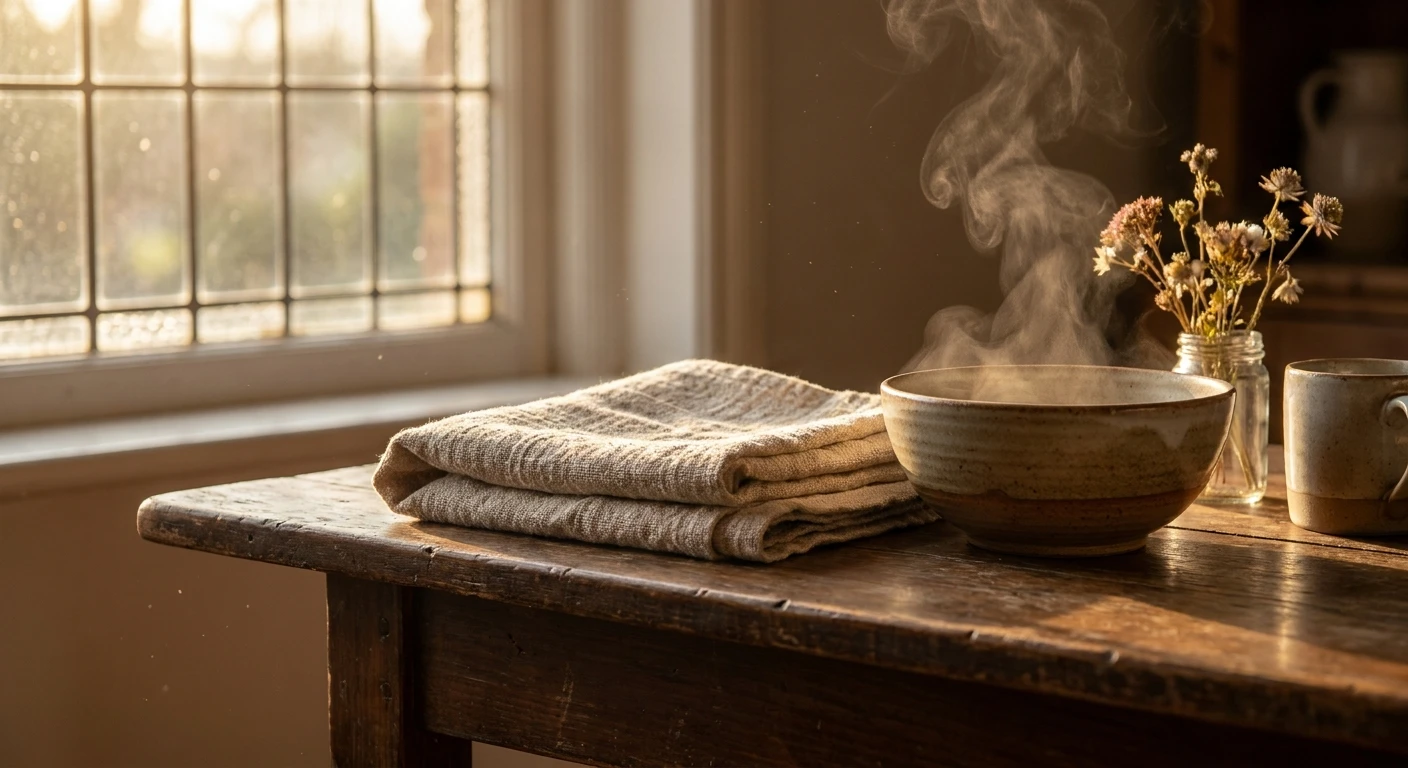
You do not need anything fancy to get started. Grab a clean, soft washcloth or a small hand towel. 100% cotton works best because it holds water exceptionally well and feels gentle against the sensitive skin. You will also need a medium-sized mixing bowl, a source of hot water (like a kettle, microwave, or simply the hot tap), and a dry towel to wrap the damp one in if you want to extend the overall heat duration.
Step 2: Choose the Optimal Heating Method
You have two main choices here. You can either run the cloth directly under hot tap water, or you can heat a bowl of water and soak the cloth. I highly recommend the bowl method because it allows you to control the exact temperature and prevents you from accidentally burning your hands directly under a scalding tap. Never microwave a dry towel, as it poses a massive fire hazard in your kitchen.
Step 3: Prepare the Water Temperature
The water should be very warm but absolutely not boiling. The ideal temperature is somewhere between 105°F and 115°F (40°C to 46°C). If you do not have a liquid thermometer handy, just use your elbow to test the water. It should feel like a very hot bath—comforting, not painful. If you have to yank your elbow away quickly, let the water cool down for five solid minutes.
Step 4: Soak and Wring Out the Fabric
Submerge your cotton washcloth entirely into the bowl of water. Give it a few seconds to absorb the liquid fully into the fibers. Carefully pull it out and wring it tightly over the sink. You want the fabric to be damp and steaming, but certainly not dripping wet. If it is dripping, it will make a mess and actually cool down much faster as the excess water evaporates into the surrounding air.
Step 5: Test the Heat Level on Your Wrist
Before placing the cloth on a sensitive area like your eyes or your neck, firmly press it against the inside of your wrist. The skin there is very thin and highly sensitive to temperature variations. If it feels comfortably hot and soothing, you are ready to proceed. If it stings or burns even slightly, wave the cloth in the air for ten seconds to let some steam escape.
Step 6: Apply to the Target Area
Fold the cloth neatly so it fits perfectly over the specific area you are treating. Press it gently against your skin. If you are targeting a larger area like a sore lower back, you can place a piece of plastic wrap directly over the wet towel, and then place a larger dry towel on top of that. This creates a brilliant mini-sauna effect, trapping the heat and moisture against your skin for a much longer period.
Step 7: Monitor and Reheat as Needed
A typical wet towel will hold highly effective heat for about 10 to 15 minutes. Once it starts feeling lukewarm, it is no longer providing optimal therapeutic benefits. If you need more time, simply dip the cloth back into the hot water bowl, wring it out again, and reapply. Limit your total session to about 20 minutes to prevent mild skin irritation.
There is a lot of bad advice floating around the internet about home remedies. Let us clear up some extremely common misconceptions.
Myth: Hotter is always better for killing intense pain.
Reality: Extreme heat can cause thermal burns, severe skin irritation, and actually increase inflammation by damaging the outermost layers of your epidermis. Comfortably warm is always the medically sound choice.
Myth: You should leave a heated pad on overnight for maximum healing.
Reality: You should never sleep with a heat source on your body. Not only does this risk severe burns while you sleep, but prolonged heat exposure can cause rebound congestion in your tissues. Limit sessions strictly to 20 minutes max.
Myth: Dry heat works exactly the same as moist heat.
Reality: Moist heat penetrates bodily tissues much faster and much deeper than dry heat, making it infinitely better for deep muscle spasms and joint stiffness.
Myth: You must use boiling water to thoroughly sanitize the cloth.
Reality: As long as you start with a freshly laundered washcloth, hot tap water is perfectly safe and highly hygienic for external skin applications.
Can I use a ziplock bag?
Yes, if you want dry heat. You can fill a sturdy ziplock bag with hot water, wrap it securely in a thin towel, and use it. Just ensure the seal is incredibly tight to avoid messy leaks on your furniture.
How long should I leave it on?
The golden rule for thermal therapy is 15 to 20 minutes per session. You can safely repeat this every two hours if necessary for chronic pain.
Is it good for acne breakouts?
Applying warmth can help bring a deep, painful pimple to a head faster by increasing local circulation, but be extremely gentle so you do not irritate the surrounding sensitive skin.
Should I use it for acute injuries?
No. For the first 48 hours after a fresh injury (like a violently sprained ankle), you should strictly use ice to reduce swelling. Heat is for chronic pain or ongoing muscle tension.
Can I microwave a wet towel?
Technically yes, if it is completely damp. Microwave it in short 15-second intervals. However, microwaving creates massive hot spots that can easily burn your skin, so the hot water bowl method is much safer and more reliable.
What fabric is best?
Thick, 100% cotton or pure linen works best. Synthetic fabrics like polyester do not retain moisture well and can sometimes warp or melt slightly if exposed to extreme temperatures.
Can I add essential oils?
Absolutely. Adding a drop of lavender or eucalyptus to the hot water before soaking your cloth adds a wonderful aromatherapy element that helps relax the nervous system even further.
Can I use this for sinus pressure?
Yes, placing a warm, damp cloth gently across your forehead and the bridge of your nose is an excellent, natural way to relieve stubborn sinus congestion and pounding tension headaches.
Taking care of your body does not always require a tedious trip to the local pharmacy. By simply utilizing water, a basic towel, and a little bit of time, you have direct access to one of the most effective, biologically sound therapies available anywhere. The next time you feel a nasty muscle knot forming or an eyelid twitching, skip the stress entirely. Grab a towel, run the hot water, and give your body the comforting relief it genuinely deserves. Try this simple method today and make sure to share this comprehensive guide with friends or family who need a quick fix for their daily aches!

Leave a Reply