

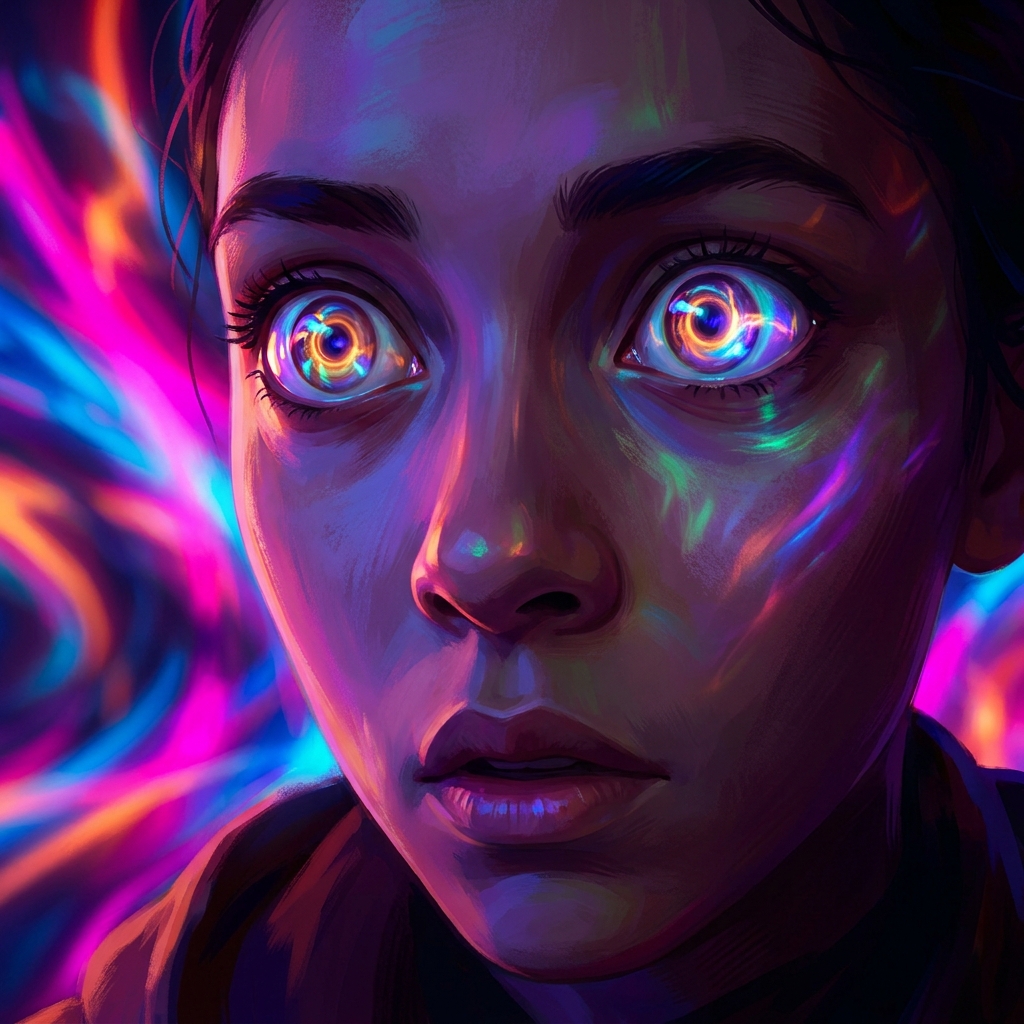
Understanding Manic Episode Eyes From a Close Perspective
Hey there. Have you ever looked at someone you care about and felt like they looked completely different, just based on their gaze? When you see manic episode eyes for the first time, it really sticks with you and completely changes how you understand mood shifts. Just last month here in Kyiv, early in 2026, I met up with a brilliant artist friend for coffee near the Golden Gate. We were sitting at a small cafe, and almost immediately, I knew his mood cycle was shifting rapidly upward. His eyes were intensely wide, almost entirely unblinking, and locked onto everything with an overwhelming energy. It was a classic physiological response, acting as a direct window into a highly overstimulated nervous system. Trust me, recognizing these physical, bodily cues can be an absolute game-changer when you are trying to support someone navigating bipolar disorder. The eyes genuinely do not lie, especially when the brain is suddenly flooded with powerful neurotransmitters. By understanding what happens on a biological level, you can offer far better support, empathy, and practical help. Let me walk you through exactly what this looks like in real life, the fascinating science behind it, and how to safely handle the situation without panicking or making the wrong assumptions about your loved one.
The Core Physical Changes and How to Spot Them
So, what exactly is happening when we talk about this specific look? It is not just a vague feeling; there are actual, measurable physical changes happening to the eyes during a manic high. When the sympathetic nervous system kicks into overdrive, the body reacts as if it is facing an extreme survival situation, even if the person is just sitting on a sofa. The pupils dilate massively, making the eyes appear much darker than usual. The muscles around the eyes tighten, causing the eyelids to pull back and expose more of the white part of the eye, which creates that famous intense stare.
| Physical Sign | Detailed Description | Biological Meaning |
|---|---|---|
| Pupil Dilation (Mydriasis) | The black center of the eye becomes highly enlarged, often covering most of the iris. | Signals a massive spike in adrenaline and sympathetic nervous system arousal. |
| Widened Gaze | The eyelids are pulled back further than normal, showing more of the sclera (white area). | Indicates hyper-vigilance and extreme mental stimulation. |
| Decreased Blinking | The person blinks far less frequently, leading to a glassy or highly reflective appearance. | Shows intense, laser-like focus and a racing mind processing rapid thoughts. |
Recognizing these signs offers immense value. For instance, if you notice these changes early, you can gently suggest a low-stimulation environment before the mania peaks. Another example is that tracking these eye changes can help psychiatric professionals adjust care plans faster. Here is exactly how you should respond if you notice these signs:
- Stay completely calm and grounded. Your relaxed demeanor can help de-escalate their internal pacing.
- Reduce environmental stimulation. Dim the harsh lights, turn down loud music, and speak in a softer tone.
- Communicate with their care team. If you have an action plan in place, use these physical cues as your signal to reach out to their doctor.
The Ancient Origins of Observing Mania
People have been noticing these intense physical shifts for thousands of years. Long before we had modern psychiatric manuals or neuro-imaging technology, ancient Greek and Roman physicians were carefully documenting the physical changes in patients experiencing extreme mood elevation. Aretaeus of Cappadocia, a celebrated physician from antiquity, explicitly wrote about patients whose eyes appeared “glowing” and intensely focused during periods of what he called “mania.” They didn’t understand the neurochemistry back then, but they absolutely recognized that the eyes were the primary visual indicator of a changing mental state. They saw the soul’s fire, as they called it, burning right through the gaze.
The Clinical Evolution in the 20th Century
Fast forward to the 20th century, and the observation of the eyes became a more formalized part of clinical assessments. Early psychiatrists like Emil Kraepelin, who famously categorized manic-depressive illness, noted that physical appearance, including a bright, piercing, or sometimes restless gaze, was a hallmark symptom of the manic phase. Nurses and ward staff were trained to look for the “sparkle” or the widened stare as an early warning sign that a patient was escalating. It transitioned from a poetic observation into a documented clinical symptom, although it was still mostly based on subjective human observation rather than hard biometric data.
The Modern State of Diagnosis
Right now, as we navigate through 2026, the medical community relies heavily on both clinical observation and advanced biometrics. We no longer just say someone looks “intense.” We understand that the physiological markers in the eyes correlate directly with manic episodes. While eye appearance alone isn’t a standalone diagnostic tool for bipolar disorder, modern psychiatrists frequently include pupillary response and eye-tracking behavior in their holistic assessments. It is widely recognized as a valid, physical manifestation of the internal chemical storm, bridging the gap between psychiatry and neurology.
The Adrenaline and Dopamine Surge
Let’s get into the biological mechanics. When a manic episode begins, the brain starts pumping out excess levels of neurotransmitters, specifically dopamine and norepinephrine (adrenaline). Dopamine is the reward and pleasure chemical, making the person feel invincible, while norepinephrine acts as the brain’s internal energy drink. This massive chemical surge doesn’t just stay in the brain; it floods the entire body. The muscles governing the eyes are incredibly sensitive to these chemicals. The adrenaline binds to receptors in the iris, forcing the dilator pupillae muscle to contract, which instantly pulls the pupil wide open. This is a basic fight-or-flight mechanism acting completely out of context.
The Autonomic Nervous System Response
At the same time, the autonomic nervous system is firing on all cylinders. This is the system that controls things you don’t actively think about, like heart rate, digestion, and of course, pupil size and blinking. Because the sympathetic branch (the “gas pedal”) is stuck to the floor, the parasympathetic branch (the “brakes”) can’t do its job of relaxing the eye muscles. The result is a sustained, hyper-aroused physical state.
- Pupillary light reflex is altered: Even in bright rooms, the pupils may remain unusually large because the chemical signals override the normal response to light.
- Tear film disruption: Decreased blink rates mean the eyes dry out faster, which ironically prompts the tear ducts to overcompensate, creating that “glassy” look.
- Saccadic eye movements: The eyes may dart rapidly from object to object (saccades) as the brain tries to process a flood of racing thoughts and visual stimuli simultaneously.
Step 1: Establish a Baseline
If you want to track these changes accurately to help a loved one, you need a baseline. Look at their eyes when they are completely stable, well-rested, and in a neutral mood. Notice their normal pupil size in average indoor lighting and how often they blink. You can’t spot an abnormality if you don’t know what their “normal” looks like.
Step 2: Notice the Ambient Lighting
When you suspect a shift, always check the room’s lighting first. Pupils naturally dilate in the dark. If you are in a brightly lit kitchen and their pupils are completely blown out, dominating the colored part of the eye, that is a massive physiological clue that their nervous system is highly activated.
Step 3: Check for the Characteristic Stare
Pay close attention to their eyelids. Are they pulled back tightly? Is there tension in their forehead and around their brow? The “bipolar stare” is often described as looking right through you, rather than at you. It is a look of absolute, rigid focus that feels slightly unnatural for the context of a casual conversation.
Step 4: Monitor Eye Movement Speed
Watch how they take in their environment. During a manic high, people are easily distracted and highly reactive. Their eyes might dart quickly around the room, tracking every tiny movement or shadow. This rapid movement matches the speed of their racing internal thoughts.
Step 5: Look for Sleep Deprivation Signs
Mania often severely disrupts sleep. Check the areas around the eyes for deep shadows, redness, or puffiness. Interestingly, despite the clear physical signs of exhaustion around the eye sockets, the eyes themselves will still look incredibly energized, bright, and wide awake. This contrast is a major red flag.
Step 6: Document Changes Conservatively
Keep a private, secure journal of what you see. Don’t confront the person aggressively about how they look, as this can cause paranoia or irritation. Instead, quietly note the date, time, and physical descriptions of their eyes, alongside any behavioral changes you are witnessing.
Step 7: Share Findings with a Professional
Use your observations to inform their medical team. Saying, “They are acting weird,” is vague. Saying, “For the last three days, their pupils have been fully dilated even in daylight, their blink rate has dropped, and they haven’t slept,” gives a psychiatrist concrete, actionable data to work with.
Myths: Separating Fiction From Biology
Because the eyes look so intense, a lot of unfair and stigmatizing myths have popped up over the years. We need to clear these up right now.
Myth: The intense stare means the person is dangerous or about to become violent.
Reality: The wide-eyed look is simply a biological reflex to adrenaline. It indicates extreme internal energy, not malicious intent or aggression toward others.
Myth: You can instantly diagnose bipolar disorder just by looking into someone’s eyes.
Reality: While it is a strong indicator of a manic state, pupil dilation can also be caused by medications, recreational substances, anxiety, or even simple excitement. It is just one piece of a much larger clinical puzzle.
Myth: A person’s actual eye color changes during an episode.
Reality: The iris pigment does not change color at all. However, because the pupil gets so massively large, very little of the colored iris is visible, making the eyes appear black or significantly darker than usual.
Frequently Asked Questions
Are manic episode eyes always present during an episode?
Not always. While it is a very common physical symptom, bipolar disorder manifests differently in everyone. Some people exhibit obvious eye changes, while others only show behavioral or speech-related symptoms.
Do pupils dilate during hypomania too?
Yes, they can, but usually to a much lesser degree. Hypomania involves a milder surge of adrenaline and dopamine, so the physical tension and pupil dilation won’t be as extreme as in full-blown mania.
Can medication change eye appearance?
Absolutely. Certain psychiatric medications, particularly older antidepressants or specific antipsychotics, can affect pupil size and blink rate. Always consult a doctor to differentiate between a medication side effect and a mood shift.
Is a glassy look part of this?
Yes. The glassy appearance happens because the person is blinking less frequently, causing the tear film to sit on the eye longer, which reflects light more sharply.
How long does this eye state last?
The physical appearance typically lasts as long as the severe acute phase of the episode. Once the neurotransmitter levels begin to stabilize and the nervous system calms down, the eyes will return to normal.
Can intense anxiety cause the exact same look?
Anxiety triggers the exact same fight-or-flight sympathetic nervous system response, so yes, severe panic can cause widened eyes and dilated pupils. Context and other accompanying behaviors are key to telling them apart.
What exactly is the “bipolar stare”?
It is a colloquial term used by patients and loved ones to describe the intense, unblinking, widened gaze that happens when someone is highly elevated. It is a real physical phenomenon rooted in autonomic nervous system arousal.
Ultimately, recognizing these physical signs is about building empathy and awareness. By paying attention to these biological cues, we can offer better, faster support to those we love when they need it most. Keep learning, stay observant, and always approach these situations with compassion.

Leave a Reply