
How to remove nail glue from skin Quickly and Safely
Figuring out how to remove nail glue from skin is basically a rite of passage for anyone doing a DIY manicure at home. Look, I’ve been there so many times. Just last week in my Kyiv apartment, right before the power grid scheduled a temporary blackout, I was rushing to fix a broken acrylic nail in the fading daylight. Next thing I knew, my thumb and index finger were totally fused together like a rock. Immediate panic mode activated, right? But honestly, do not worry, because you are not stuck like this forever. The entire thesis here is simple: you can easily dissolve that stubborn cyanoacrylate (yeah, that is the fancy chemical name for nail glue) using extremely gentle, everyday household items without tearing your delicate skin apart. By understanding the actual chemical makeup of the adhesive and applying specific fatty oils or solvent-based agents, you can easily break the stubborn bond safely and completely painlessly. I am writing this guide to give you the exact, foolproof playbook my favorite nail tech friend in Lviv shared with me after I desperately texted her. It is highly practical, 100% painless, and uses things you probably already have sitting in your kitchen cabinets or bathroom vanity right now. Let’s get that sticky, annoying mess off your hands immediately so you can go back to scrolling your phone or whatever you actually want to be doing with your fingers today.
When dealing with accidentally glued fingers, the absolute worst thing you can possibly do is pull them apart by force. Tearing the skin causes micro-abrasions, which can quickly lead to painful infections and severely damaged tissue. The main benefit of doing this properly is preserving your skin barrier while efficiently getting rid of the harsh chemical resin. Let me break down the core methods, exactly why they work, and how they protect you. First, the value proposition: saving your skin means avoiding contact dermatitis and keeping your hands looking flawless even after a messy accident. For example, using a rich, oil-based method deeply nourishes your dry cuticles while simultaneously dissolving the stubborn glue bond. Another great example is the acetone soak method, which is significantly faster but requires some intense moisturizing afterward to balance out the harshness.
Here is a detailed breakdown of the top methods, the estimated time required for each, and their overall impact on your skin health:
| Removal Method | Estimated Time Needed | Overall Skin Impact |
|---|---|---|
| Warm Soapy Water Soak | 15 to 20 minutes | Very Gentle & Hydrating |
| 100% Pure Acetone | 3 to 5 minutes | Highly Drying & Aggressive |
| Olive Oil or Vaseline | 10 to 15 minutes | Extremely Nourishing |
You clearly have options depending on what is currently within arm’s reach while your fingers are stuck. Here is exactly what you should do before you pick a specific method and proceed:
- Stop panicking immediately and deliberately tell yourself not to pull the fingers apart or rip the dried glue off your skin.
- Assess the spill area closely to see if it is a tiny, manageable dot or a massive clump covering multiple fingers and nails.
- Gather all your necessary supplies immediately so you aren’t awkwardly wandering around your house with glued hands trying to open heavy cabinets.
- Wash the surrounding area very gently with lukewarm water just to remove any surface debris or dust before applying any kind of solvent.
- Pick a well-ventilated room if you plan on using harsh chemicals like acetone to avoid breathing in strong, dizzying fumes.
Applying these techniques correctly ensures you absolutely will not need an embarrassing trip to the dermatologist. Now, navigating this sticky situation smoothly requires knowing what you are actually dealing with on a deeper level.
The Origins of Cyanoacrylate Adhesives
Believe it or not, the stuff bonding your skin right now has a genuinely wild and fascinating history. Nail glue is essentially a direct variation of cyanoacrylate, a powerful chemical compound discovered entirely by accident back in 1942. Scientists during World War II were originally trying to formulate clear plastic gun sights for soldiers on the front lines. Instead, they accidentally created an incredibly frustrating substance that immediately stuck to absolutely everything it touched, including human skin and lab equipment. It was quickly shelved and abandoned by the military because it was simply too sticky to work with. Fast forward a few years later, researchers re-examined it and realized this so-called sticky flaw was actually a massive, game-changing breakthrough for industrial manufacturing and medical grade adhesives.
The Evolution into Cosmetic Nail Glue
By the vibrant beauty boom of the 1970s and 1980s, the booming cosmetics industry finally caught wind of this super-strong, instant adhesive. Acrylic nails and elaborate extensions were becoming a huge mainstream trend, but the traditional glues available at the time were terribly weak and took forever to dry properly. Cosmetic chemists began obsessively tweaking the original harsh cyanoacrylate formula. They desperately needed something that cured in seconds but was slightly less toxic than heavy industrial super glue. They successfully added specific stabilizers, thickeners, and preservatives to create the cosmetic nail glue we all know today. However, they couldn’t entirely engineer out the most annoying side effect: it instantly bonding to human skin—because, chemically speaking, our skin’s natural moisture triggers the curing process.
The Modern State of Nail Adhesives in 2026
Here we are securely living in 2026, and nail art technology is honestly more advanced and complex than ever before. Yet, the core frustrating problem stubbornly remains. Even with the absolute latest vegan, cruelty-free, and supposedly ‘skin-safe’ luxury formulations hitting the beauty market this year, the active ingredient still reacts incredibly rapidly to microscopic moisture. Modern nail glues cure incredibly fast to keep up with our fast-paced, busy lives, meaning annoying accidents naturally happen much faster too. High-end brands have definitely tried adding precision brush-on applicators to minimize spills, but one slight slip of the hand, and you still immediately need a reliable rescue plan. Knowing this rich history deeply helps you realize you aren’t just clumsy; you are actively fighting a highly engineered chemical designed specifically to bond instantly.
The Chemistry of Curing
Why does nail glue dry the exact second it touches your unprotected finger? It all comes down to an intense exothermic chemical reaction scientifically known as anionic polymerization. I know, that sounds exactly like a terrifying, impossible physics exam question, but it’s actually pretty straightforward when you break it down. Cyanoacrylate molecules are basically dormant little builders waiting for a specific trigger to link together into a hard, unbreakable plastic mesh. That ultimate trigger is just plain water. Since human skin naturally contains microscopic moisture, oils, and sweat, the precise moment the liquid glue touches you, the water ions act as an immediate catalyst. The molecules rapidly form incredibly long, strong chains, actually generating a tiny bit of thermal heat in the process. This is exactly why you sometimes feel a weird, warm sensation when the glue sets aggressively on your skin.
Breaking the Polymer Bond
So, how do we successfully reverse this aggressive chemical reaction? You simply cannot just wash away hardened, cured plastic with regular cold water. You explicitly need an agent that breaks down those tight molecular chains. Solvents like acetone literally wedge themselves right between the polymer chains, forcing them entirely apart and effectively turning the rock-hard plastic back into a gooey, easily wipeable state. If you don’t have acetone, lipids (fats) are your next absolute best friend.
Here are the critical scientific facts about breaking down cyanoacrylate properly:
- Acetone’s supreme solvent power: Acetone is a highly volatile organic compound that aggressively dissolves the entire structural integrity of cyanoacrylate polymers in mere minutes.
- Lipid disruption technique: Natural oils (like olive, coconut, or jojoba) slowly seep deeply under the hard edges of the glue, breaking the mechanical bond between the adhesive layer and the dead skin cells without actually dissolving the plastic itself.
- Friction and thermal heat: Combining warm water with very gentle, sustained mechanical friction vastly accelerates the breakdown of the adhesive bond by heavily softening the skin layer directly beneath the glue.
- Surfactant action: Standard household dish soap contains powerful surfactants that lower the surface tension of water, actively allowing it to deeply penetrate the microscopic gaps between the glue resin and your skin.
Understanding this fundamental science honestly makes removing it feel much less intimidating and much more manageable.
Alright, let’s get right into the exact step-by-step process. Treat this detailed breakdown as your foolproof, ultimate rescue mission. If one specific step doesn’t completely do the trick for your situation, just move right to the next one without stressing.
Step 1: The Warm Soapy Soak
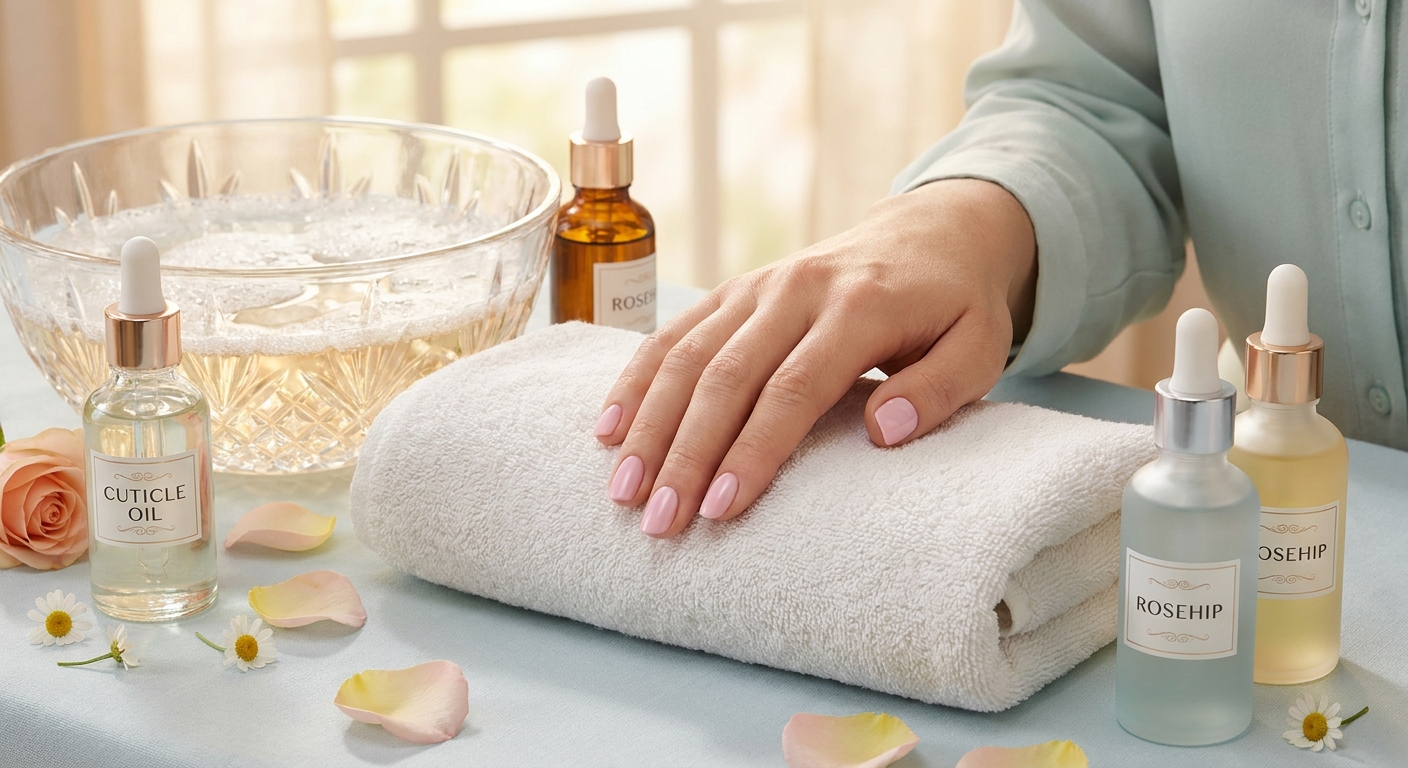
Start by filling a small, comfortable bowl with warm water—make it exactly as warm as you can comfortably handle without burning yourself. Squirt in a highly generous amount of liquid dish soap. Submerge the aggressively glued skin completely for a solid 5 to 10 minutes. The sustained heat naturally softens the adhesive while the soapy surfactants start lifting it.
Step 2: The Gentle Roll Technique
After soaking thoroughly, whatever you do, do not pull your fingers apart. Instead, very gently roll the glued fingers back and forth against each other. This specific motion creates a subtle, safe shearing force that slowly but surely breaks the chemical bond without tearing your fragile epidermis.
Step 3: Apply a Rich Oil-Based Lubricant
If the glue is stubbornly still holding on tight, immediately grab olive oil, coconut oil, or even standard baby oil. Slather it heavily all over the affected area. Rub it in soft, continuous circular motions. The heavy fats in the oil will gradually start to seep right under the hard edges of the glue layer.
Step 4: The Pure Acetone Intervention
Still firmly stuck? It is definitely time to bring out the heavy chemical guns. Take a simple cotton swab or a dense cotton ball and soak it completely in 100% pure acetone nail polish remover. Press it firmly and directly onto the dried glue spot. Hold it there steadily for about three full minutes to aggressively melt the polymers.
Step 5: The Careful Emery Board Buff
For incredibly thick clumps of dried glue that just won’t melt away easily, gently use a fine-grit nail file or emery board. Very carefully buff down only the very top, hard layers of the glue. Stop immediately if you feel the grit touching your actual skin. This simply thins the hard barrier so your solvents can work much faster.
Step 6: Wash and Safely Exfoliate
Once the tight bond is successfully broken and your fingers are finally completely free, wash your hands thoroughly with standard soap and water to instantly remove all the drying acetone and lingering, gross chemical residue. You can carefully use a mild sugar scrub if you still have tiny, annoying flakes of glue left behind.
Step 7: Intense Moisture Therapy
Acetone and heavy dish soap severely strip your sensitive skin of its protective, natural moisture barrier. Always finish up this intense process by actively applying a thick, generous layer of hydrating hand cream, cuticle oil, or classic Vaseline to fully restore lost hydration and totally prevent painful cracking.
There is honestly a lot of terrible, wildly dangerous advice floating around on the internet about fixing this specific issue. Let’s clear that absolute nonsense up right now so you stay safe.
Myth: You can just aggressively bite or peel the dried glue right off with your teeth.
Reality: Doing this foolishly almost always painfully rips off the delicate top layer of your skin, leaving a highly sensitive, bleeding wound that notoriously takes painful weeks to properly heal.
Myth: Boiling hot water works significantly faster to instantly melt the glue away.
Reality: Boiling water will honestly just give you severe, trip-to-the-hospital level thermal burns. Cyanoacrylate physically doesn’t melt at temperatures human skin can safely withstand. Please, stick to pleasantly warm water.
Myth: Literally any cheap, drugstore nail polish remover will easily work.
Reality: Weak, non-acetone removers are virtually completely useless against industrial-strength nail glue. You strictly need 100% pure acetone to actually break down the complex chemical polymers effectively.
Myth: Ice cubes will freeze the glue solid so it safely snaps completely off.
Reality: Freezing the glue actually makes the resin significantly harder and wildly more brittle, drastically increasing the scary chance of tearing your skin if you attempt to snap it off.
Does Vaseline effectively remove nail glue?
Yes, standard petroleum jelly can absolutely break down the stubborn bond if heavily applied and left on the skin for several consecutive hours.
Can I successfully use regular rubbing alcohol?
Rubbing alcohol is significantly less effective than pure acetone but can sometimes help dry out and slowly loosen very thin, superficial layers of glue.
How long does it actually take for nail glue to wear off naturally?
If you literally do absolutely nothing, your body’s natural skin cell turnover will safely shed the dried glue entirely in about 3 to 5 full days.
Is pure acetone completely safe for all skin types?
Acetone is notoriously highly drying and harsh. People dealing with sensitive skin or eczema should strictly stick to using the gentler oil method instead.
Can standard kitchen butter work if I literally don’t have any oil?
Yes, the high fat content found in butter or margarine acts practically identically to olive oil in slowly loosening the stubborn adhesive bond.
Does acidic lemon juice actually dissolve nail glue?
The natural acidity found in lemon juice can somewhat help break down the glue when directly mixed with warm soapy water, though the process is notoriously slow.
Will liquid hand sanitizer work in an absolute pinch?
Only slightly, unfortunately. Hand sanitizer heavily contains alcohol, which might barely weaken very thin layers, but it absolutely will not melt thick clumps.
Getting gracefully out of a highly sticky situation absolutely doesn’t have to end in miserable tears or dangerously torn skin. By deeply understanding the basic chemistry behind the adhesive and calmly using standard household oils or strong acetone patiently, you can easily save your gorgeous manicure and completely protect your delicate hands. If you genuinely found this ultimate rescue guide incredibly helpful, definitely share it with your fellow DIY nail art friends immediately so they never have to absolutely panic over severely glued fingers ever again!

Leave a Reply