

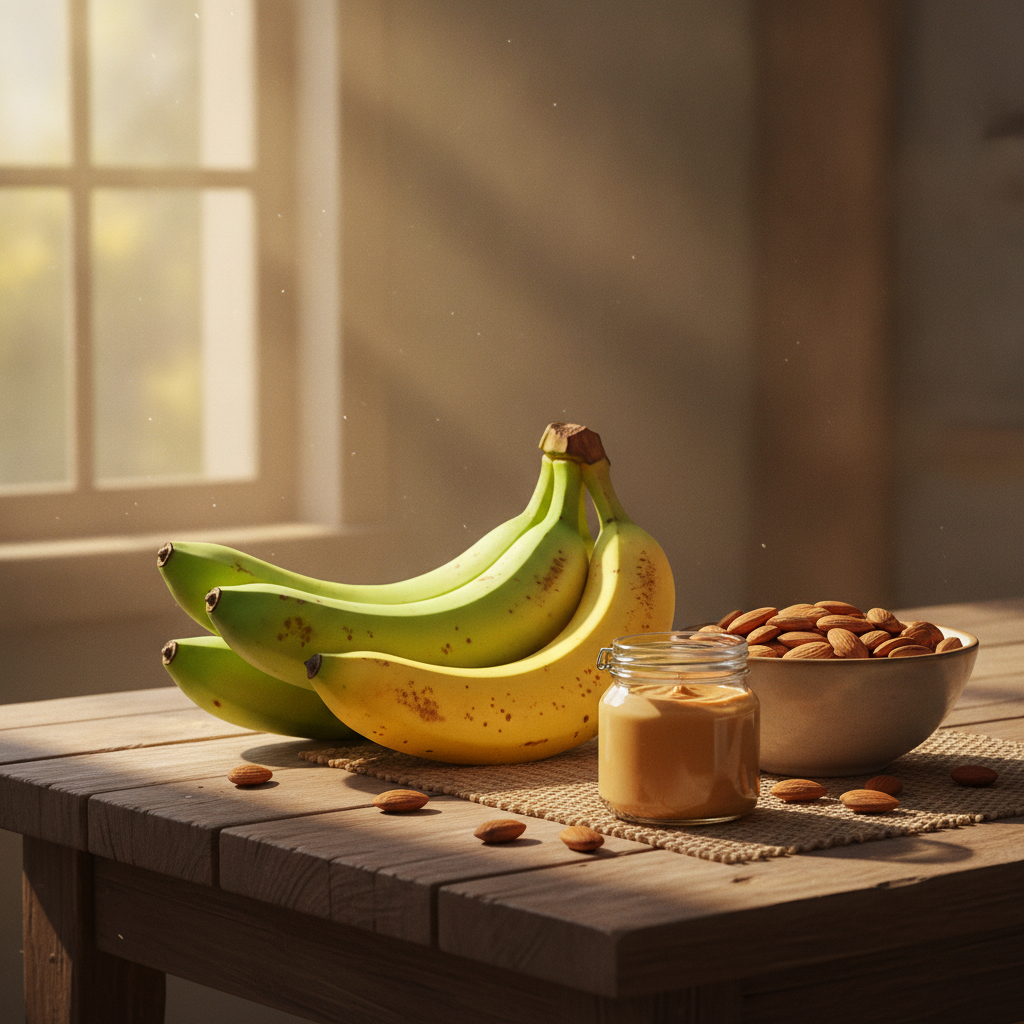
Are Bananas Good For Diabetics: The Honest Truth
If you keep asking, are bananas good for diabetics, I want you to know that you are definitely not alone. I remember visiting my uncle in Kyiv last summer. He had just been diagnosed with type 2 diabetes and was completely terrified of fruit. He stared at a beautiful bunch of yellow bananas sitting on the kitchen counter like they were radioactive material. It broke my heart a little bit because food should be enjoyed, not feared. The short answer to your question is yes, you can absolutely eat them. But there is a serious catch regarding ripeness, portion size, and what you pair them with.
Managing your blood sugar does not mean you have to give up absolutely everything sweet. You just need to be incredibly smart about it. These fruits pack amazing vitamins, dietary fiber, and a natural energy boost that your body constantly craves. It is entirely about timing and pairing. I am going to break down exactly how you can keep these delicious yellow fruits in your daily routine without sending your continuous glucose monitor into an absolute panic. We will evaluate the carb counts, the glycemic index, and the absolute best ways to prepare them so you stay healthy, satisfied, and energized. Even in 2026, with all our advanced medical tech, the basic rules of human nutrition still apply. Eating whole foods matters more than ever.
Understanding exactly how your body reacts to carbohydrates is the absolute foundation of managing your blood sugar levels. Bananas are quite carbohydrate-dense, which is exactly why people worry about them so much. A medium-sized one contains about 27 grams of total carbs, including around 14 grams of natural sugar. However, it also gives you roughly 3 grams of dietary fiber. That fiber is crucial because it actively slows down the absorption of that sugar directly into your bloodstream.
When someone asks me how to safely eat sweet fruits, I always tell them to check the glycemic index (GI). The GI simply measures how quickly specific foods spike your blood sugar. Green ones actually have a much lower GI because they contain resistant starch. Fully ripe, brown-spotted ones have a significantly higher GI because those complex starches have completely converted to free, simple sugars.
Here is a straightforward value proposition for you: you get essential nutrients like potassium, vitamin B6, and vitamin C naturally, without taking expensive artificial supplements. For example, eating a greener one provides excellent prebiotic fiber that actively feeds your good gut bacteria. As another example, slicing a slightly yellow one into a bowl of plain Greek yogurt adds natural sweetness while the yogurt’s dense protein actively blocks a rapid glucose spike.
- Always pair with protein or fat: Never eat one completely on its own on an empty stomach. Always add peanut butter, a hard-boiled egg, or a handful of almonds.
- Choose your ripeness carefully: Go for green or slightly yellow instead of heavily brown-spotted if you want a much lower glycemic impact.
- Watch the portion size: You absolutely do not have to eat the whole thing at once. Eat half right now and save the remaining half for later in the day.
| Ripeness Stage | Carb Profile | Blood Sugar Impact |
|---|---|---|
| Green (Unripe) | High Resistant Starch | Low to Moderate |
| Yellow (Firm) | Balanced Starch and Sugar | Moderate |
| Brown Spots (Very Ripe) | High Simple Sugars | High (Proceed with caution) |
By simply knowing these basic facts, you stop guessing entirely and start taking real control over your health. When you combine the fruit with a handful of walnuts or a slice of sharp cheese, the digestion process stretches out over several hours in your gut. This incredibly steady release of energy actively prevents the sudden crash that leaves you feeling extremely tired and hungry all over again. You get to enjoy the exact flavors you love without compromising your long-term health goals.
Origins of the Banana
Before we had modern supermarkets completely loaded with perfectly uniform fruits, they looked completely different. They actually originated in Southeast Asia, most likely in ancient regions like modern-day Malaysia and Indonesia. Early humans discovered these wild plants growing naturally in the jungle, which were actually packed with massive, hard, black seeds. People honestly did not eat them for their sweet flavor back then; they boiled or cooked the intensely starchy flesh just to survive. It literally took thousands of years of extremely careful cross-breeding by brilliant early farmers to create the totally seedless, sweet varieties we easily recognize today.
Evolution and Global Spread
Historic Arab traders eventually brought the fruit over to the Middle East and Africa, where it quickly became a massive staple crop for local communities. The word itself actually comes from the Arabic word ‘banan’, which literally translates to finger. When early Portuguese explorers eventually reached West Africa, they immediately established massive plantations and eventually carried the live plants across the Atlantic Ocean directly to the Americas. By the time the 19th century rolled around, the amazing invention of refrigerated steamships allowed massive quantities to be shipped safely from Central America straight to North America and Europe. They quickly changed from being a rare, expensive exotic luxury into an everyday household staple. People absolutely loved them because they came neatly packaged in their own natural, biodegradable wrapper.
Modern State of Banana Consumption
Today, the specific Cavendish variety heavily dominates the entire global market, accounting for almost all the ones you see sitting in a standard local grocery store. However, this extreme lack of genetic diversity unfortunately makes them highly vulnerable to various global plant diseases. As far as human health goes, we definitely understand their complex nutritional profile better than ever before. Smart dietitians no longer slap a ridiculous blanket ban on them for people dealing with metabolic conditions. Instead, medical professionals focus entirely on individual carb tolerance and strict portion control. We know exactly how the complex starches magically convert to simple sugar as the fruit sits on your kitchen counter, empowering us to make highly informed choices about exactly when to peel and eat them for maximum health benefit.
The Mechanics of Resistant Starch
Let me explain why the exact color of the peel actually matters on a microscopic, cellular level. Unripe, greenish ones are totally packed with a highly specific type of complex carbohydrate called resistant starch. Unlike regular simple carbohydrates, resistant starch absolutely does not break down entirely in your small intestine. Instead, it travels all the way down into your large intestine, where it acts exactly like a giant sponge. It ferments right there, perfectly feeding the highly beneficial bacteria living inside your microbiome. Because your physical body does not immediately break it down into pure glucose right away, it barely registers on your continuous blood sugar monitor. This unique mechanism makes green ones function much more like a fibrous vegetable than a super sweet dessert fruit.
Glycemic Load vs Glycemic Index
You probably hear people constantly talking about the Glycemic Index (GI), but Glycemic Load (GL) is a substantially better metric for everyday real-life eating. The GI simply tells you how fast a specific food turns to pure sugar in a vacuum, but the GL practically accounts for the actual, real-world portion size you consume. A standard medium one has a GI of about 51, which is generally considered low-to-medium. However, its Glycemic Load is only around 11, which is incredibly moderate. If you simply slice that piece of fruit in half, you literally cut the Glycemic Load right in half, making it incredibly easy for your metabolic system to handle without panicking.
- They are incredibly rich in potassium, which directly helps regulate high blood pressure and actively protects long-term heart health, a massive priority for absolutely anyone managing a chronic metabolic condition.
- They naturally contain massive amounts of magnesium, a truly crucial mineral that actually helps massively improve overall insulin sensitivity right at the cellular level.
- The high levels of vitamin B6 naturally found in the fruit actively support the long-term health of your entire nervous system, potentially helping guard against painful diabetic neuropathy.
- As the fruit physically ripens, the pectin (a highly beneficial type of fiber) naturally breaks down, which is exactly why brown ones are much softer and sweeter but significantly less blood-sugar-friendly.
If you really want to safely integrate this delicious fruit back into your daily life, you desperately need a rock-solid strategy. Here is a highly effective 7-day plan showing exactly how to eat them without stressing your metabolic system at all.
Day 1: The Green Smoothie Start
Take exactly one half of a completely green, unripe banana. Blend it thoroughly with fresh spinach, cold unsweetened almond milk, a large scoop of zero-sugar vanilla protein powder, and a generous tablespoon of raw chia seeds. The high protein and dense fiber completely neutralize the carbohydrate impact, giving you a perfect morning.
Day 2: Peanut Butter Pairing
Slice exactly half of a slightly firm, yellow banana into thin rounds. Generously spread two full tablespoons of natural, absolutely unsweetened peanut butter directly over the slices. The massive amount of healthy fats in the ground nuts slows your stomach digestion to an absolute crawl, giving you brilliant sustained energy.
Day 3: Greek Yogurt Bowl
Dice exactly a third of a medium one directly into a full cup of high-fat, plain Greek yogurt. Liberally sprinkle ground cinnamon heavily on top. Pure cinnamon has been clinically shown to naturally aid healthy insulin function, making this an absolutely perfect afternoon combination.
Day 4: Oatmeal Enhancement
Make a hot bowl of traditional steel-cut oats (please avoid instant oats completely, they spike glucose instantly). Stir in exactly a quarter of a mashed banana for awesome natural sweetness instead of ever using honey or maple sugar, and top it heavily with freshly crushed walnuts.
Day 5: Pre-Workout Fuel
If you are planning on going for a brisk 30-minute outdoor walk or hitting the local gym, eat exactly half of a yellow one right before you step out the door. Your moving muscles will easily burn the incoming glucose immediately for quick energy before it ever has a chance to sit idle in your bloodstream.
Day 6: Cottage Cheese Dessert
Mix exactly half a freshly chopped one tightly with a half-cup of full-fat cottage cheese. I know it honestly sounds a bit weird, but the intense saltiness of the cheese and the bright sweetness of the fruit is truly amazing, plus you get a massive hit of super slow-digesting casein protein.
Day 7: The Almond Flour Pancake
Mash exactly a quarter of a very ripe one directly into a low-carb almond flour pancake batter. Almond flour has virtually zero net carbs, so the fruit smartly provides the only actual carbohydrates, keeping the whole breakfast meal perfectly balanced and utterly delicious.
There is honestly so much completely bad information endlessly floating around on social media platforms right now. Let me clearly clear the air for you right now.
Myth: Natural fruit sugar is completely different from regular table sugar so you can just eat absolutely as much as you ever want.
Reality: While whole fruit beautifully contains highly beneficial fiber and dense vitamins, your physical body still mechanically processes the raw fructose and glucose as sugar. Strict portion control is absolutely mandatory.
Myth: People with metabolic issues should only ever eat tart berries and must avoid all tropical fruits entirely forever.
Reality: Sweet tropical fruits just require significantly better portion management and smart macronutrient pairing. You can eat them perfectly safely if you just track your macros.
Myth: Cooking or baking them completely destroys all the bad sugar inside.
Reality: Applying intense heat actually completely breaks down the tough cellular structure, making the natural sugars even easier and much faster for your body to quickly absorb, potentially causing an even sharper glucose spike.
Myth: You should completely avoid eating any fruit whatsoever if your waking blood sugar is high in the morning.
Reality: The annoying dawn phenomenon happens naturally to many people. Simply shift your daily fruit intake directly to the mid-afternoon when your body’s insulin resistance might be naturally much lower.
Can I eat a whole banana at once?
Usually, it is significantly better to just stick to half to actively keep the overall carbohydrate load highly manageable for your system.
Are baby bananas better?
Yes, simply because they are physically much smaller, which beautifully and automatically enforces strict portion control without you thinking about it.
Does freezing them change the sugar content?
No, the freezing process perfectly preserves the exact nutritional and chemical profile it literally had the specific moment you shoved it into the cold freezer.
Can I drink banana juice?
Absolutely not. The violent juicing process entirely removes the highly beneficial fiber, instantly leaving you with a highly concentrated, dangerous glass of pure liquid sugar.
Is banana bread safe?
Traditional baked banana bread is heavily loaded with awful refined flour and tons of extra added sugar. Only ever eat smart low-carb, almond-flour homemade versions.
Should I eat them late at night?
Eating any dense carbs late at night can easily lead to highly elevated fasting glucose numbers the very next morning. Definitely stick to early daytime hours.
Do plantains act the exact same way?
Plantains are significantly starchier and generally always require intense cooking, but they still strictly require the exact same rigid portion control rules.
To really wrap things up neatly, successfully managing your daily diet in 2026 is entirely about leveraging smart data and making highly informed, clever choices. Do not ever fear eating fruit. Just quickly learn exactly how to use it safely to your massive advantage. Try actively pairing your fruit with a rich healthy fat today and personally see the amazing difference on your monitor! Grab a slice with some peanut butter and enjoy your life!

Leave a Reply