
If you live with endometriosis, you already know how weird the treatment conversation can get. One person talks like the answer is surgery. Another says hormones. Someone else says diet fixed everything. Then another person says nothing helped except a heating pad, a pelvic floor therapist, and finally having a doctor who stopped acting like severe pain was a personality trait. That mix can make “supportive therapy” sound vague, soft, or optional.
It isn’t.
Supportive therapy is often the part that helps daily life become livable again. Not cured. Not magically simple. But livable. It’s the layer that helps you function while the bigger medical plan is being sorted out. Sometimes it helps while medication is doing its job. Sometimes it helps after surgery. Sometimes it helps when treatment is still being figured out and you’re just trying to get through work, class, sleep, sex, exercise, or the very annoying act of standing upright in public like everything is fine.
That matters because endometriosis is not only a “lesion problem” or a “period problem.” It can turn into a pain-system problem, a muscle problem, a bowel-and-bladder problem, a fatigue problem, and a quality-of-life problem all at once. By the time many people get diagnosed, the body has often been bracing for pain for a long time. The nervous system gets louder. The pelvic floor gets tighter. Sleep gets worse. Food becomes complicated. Sex can hurt. Movement becomes a negotiation.
So yes, supportive therapy matters. A lot. The trick is keeping it honest.
No supportive therapy cures endometriosis on its own. That needs to be said clearly. But many supportive therapies can reduce pain intensity, improve function, lower symptom spillover, and make standard treatment work better in real life. That is not a small thing. That is the difference between “I technically have a plan” and “I can actually get through my week.”
This guide is about that middle space — the supportive therapies that can help alongside standard endometriosis care, the ones that are worth discussing, the ones that are low-risk and practical, and the ones that get hyped way beyond the evidence. Because endometriosis is already hard enough without having to sort truth from wellness theater while cramping.
What “supportive therapy” actually means here
For endometriosis, supportive therapy means treatments and strategies that support pain control, function, and day-to-day coping without pretending to replace core medical care. That can include pelvic floor physical therapy, heat, pacing, pain psychology, sleep support, bowel support, gentle activity, and sometimes multidisciplinary pain care. It can also include practical symptom tracking and adapting work, travel, and exercise routines so the body isn’t constantly being pushed past its limits.
And this point matters: supportive care is not the same thing as “alternative” care. Those terms get blended online, and that causes a mess. Supportive therapy can be fully mainstream. In fact, some of the most helpful options are exactly that.
Think of it like this. Endometriosis treatment often has two layers:
- The disease-focused layer, like hormones or surgery
- The symptom-and-function layer, like pain support, pelvic floor work, and daily coping tools
Most people do better when both layers get attention. Not because every supportive tool works for everyone, but because pain rarely stays polite and limited to one body system for long.
Why supportive therapy matters even when meds or surgery are on the table
A lot of people think supportive therapy is what you do only if you’re avoiding medication or delaying surgery. But that’s not really how this works. The better frame is that supportive therapy helps fill the gap between the disease and the lived experience of the disease.
Hormonal treatment may reduce bleeding and suppress symptoms, but it does not always undo pelvic floor tension, sleep disruption, bowel sensitivity, fear of flares, or the pattern of bracing for pain. Surgery may remove disease, but some people still have persistent or recurring pain afterward. That does not mean surgery “failed” in a simplistic way. It means pain is more layered than a single procedure can always fix. :contentReference[oaicite:1]{index=1}
Supportive therapy matters because it helps address those layers.
It can help when:
- You are waiting for diagnosis or specialist care
- You are using hormones but still dealing with pelvic pain or bowel symptoms
- You had surgery and pain is better, but not gone
- You are trying to protect function, work, relationships, or sleep during flares
- You want a plan that is more realistic than “just push through it”
That last one deserves more respect than it gets. “Push through it” is not a treatment plan. It is a burnout plan.
The supportive therapies that make the most practical sense
Let’s start with the options that fit most naturally into a standard care plan and have the best real-world logic behind them.
Pelvic floor physical therapy
This is probably the most important supportive therapy people still underestimate. Endometriosis pain can lead the pelvic floor muscles to stay tight and guarded. Over time, those muscles may become part of the pain loop themselves. That can show up as pain with sex, pain with bowel movements, urinary urgency, aching after sitting, or that deep, hard-to-describe “everything feels clenched” sensation people often struggle to explain.
Pelvic floor physical therapy aims to calm that system down. Despite the name, it is not always about strengthening. In fact, for some people it is much more about relaxing, lengthening, and teaching the body to stop gripping all the time. Mayo specifically notes that pelvic-floor therapy may help ease pelvic pain linked with endometriosis by relaxing those muscles. :contentReference[oaicite:2]{index=2}
This can include:
- Internal and external muscle assessment
- Relaxation and down-training work
- Breathing and pressure-management strategies
- Gentle mobility work
- Sex-pain support strategies in relevant cases
It is not magic. It also is not optional fluff. For the right patient, it can be one of the most useful parts of the whole plan.
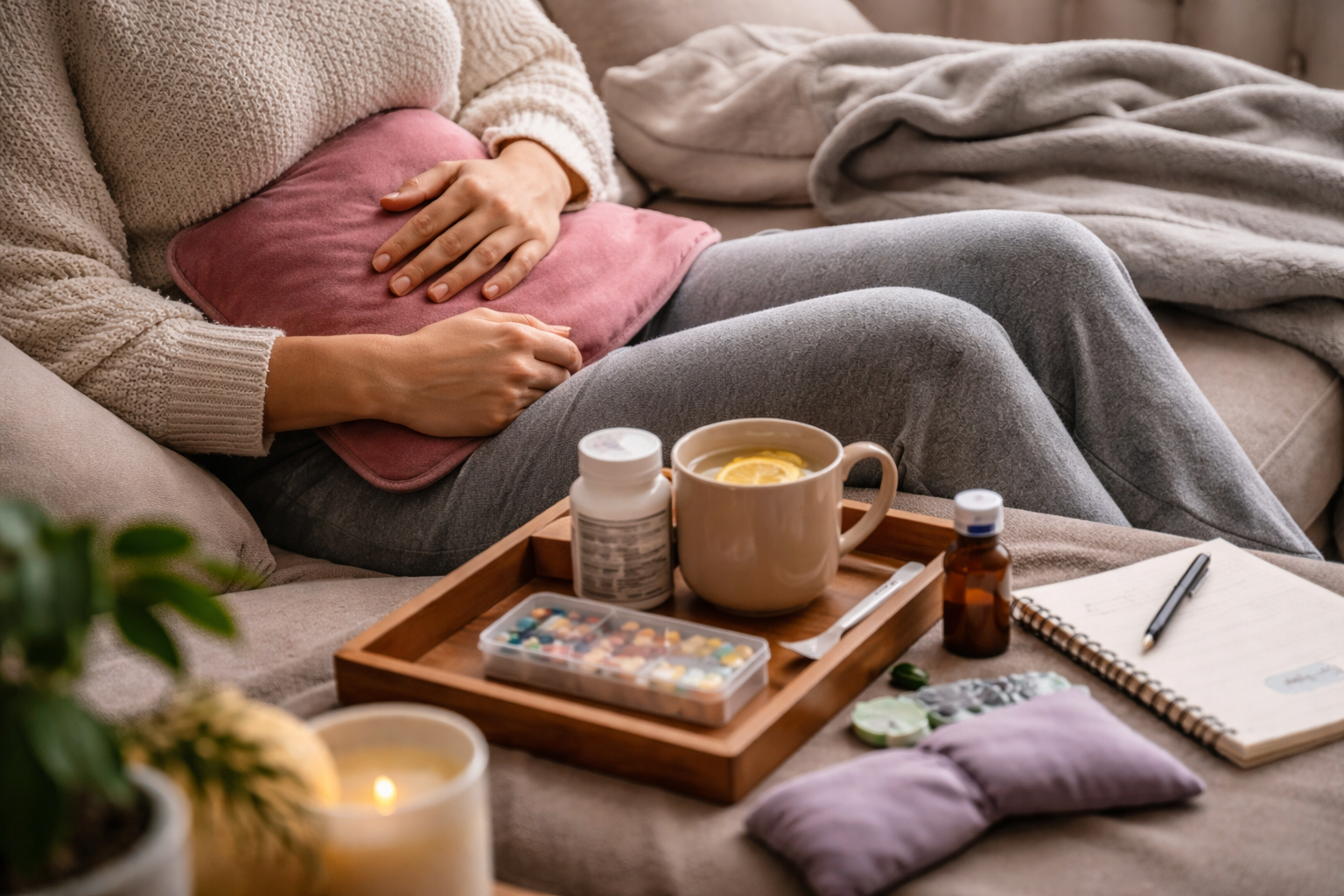
Heat and simple pain-calming tools
This one is almost too obvious, which means it gets dismissed more than it should. Heat helps many people with cramping and pelvic pain. It does not treat endometriosis itself, but it can help reduce the intensity of a flare in the moment. Heating pads, hot water bottles, warm baths, or heat patches can be a real quality-of-life tool, not just a cliché. General dysmenorrhea guidance from Mayo supports heat for menstrual cramps, and plenty of endometriosis patients find it practically useful as part of symptom support. :contentReference[oaicite:3]{index=3}
Why does this matter? Because people in pain need things that work in actual kitchens, bedrooms, offices, and cars — not only things that sound elegant in a treatment algorithm.
Heat is not glamorous. It is often effective enough to matter.
Pain-informed movement
Exercise advice around endometriosis gets weird quickly. Some people say movement fixes everything. Others say never exercise during flares. Reality, as usual, sits in the middle. The evidence for exercise as a direct endometriosis pain treatment is still mixed, and ESHRE does not treat exercise as a proven standalone therapy for pain reduction. But gentle, tolerable movement can still help many people with stiffness, mood, sleep, general chronic-pain coping, and the secondary deconditioning that pain causes. :contentReference[oaicite:4]{index=4}
The key is the phrase pain-informed movement. Not punishment movement. Not productivity movement. Pain-informed.
That may look like:
- Short walks instead of intense workouts during bad days
- Mobility work instead of pushing cardio when cramps are high
- Rest days without guilt
- Exercise choices that do not constantly trigger pelvic-floor guarding
Some people feel better with strength training when symptoms are calm. Some do better with walking, stretching, or gentle yoga-style movement. Some need to keep things very simple during a flare. There is no single heroic endometriosis workout. There is only what your system can handle without paying for it for three days.
Pain psychology and coping tools
This one makes some people tense up because they hear “psychology” and think they’re being told the pain is emotional. That is not what this means. Pain psychology is not there to argue with the reality of endometriosis. It is there to help with the nervous-system part of living in pain.
ACOG’s chronic pelvic pain guidance notes that some physical-therapy approaches include mental techniques for coping with pain, such as diaphragmatic breathing, mindfulness, and biofeedback. More broadly, multidisciplinary pain care can help with chronic pelvic pain and quality of life. :contentReference[oaicite:5]{index=5}
This kind of support can help with:
- Fear of flares
- Pain catastrophizing
- Sleep disruption
- Bracing and muscle guarding
- The mental exhaustion of unpredictable symptoms
Again, it does not mean the disease is “in your head.” It means the brain and body are both involved in how pain gets processed, anticipated, and amplified. That is standard pain science, not dismissal.
Bowel and bladder support
Endometriosis and gut symptoms often overlap in messy ways. Bloating, constipation, diarrhea, pain with bowel movements, and bladder urgency can all show up in the same person. Sometimes that is direct disease impact. Sometimes it is pelvic floor dysfunction. Sometimes it is overlap with IBS-type symptoms. Mayo notes that IBS can coexist with endometriosis, which is one reason symptoms can get confusing. :contentReference[oaicite:6]{index=6}
This is where supportive therapy gets very practical. The goal is not “follow an internet endo diet and heal everything.” The goal is: reduce extra irritation where you can.
That may include:
- Tracking food triggers without becoming obsessive
- Managing constipation aggressively and early if that is part of the pain pattern
- Adjusting fiber and hydration based on what your gut actually tolerates
- Working with a clinician or dietitian if GI symptoms are a major part of the picture
The important caution is this: evidence for a universal endometriosis diet is still limited and mixed. ESHRE’s patient material stays cautious about nutrition and other non-medical strategies, which is a good reminder not to oversell diet as a proven fix. :contentReference[oaicite:7]{index=7}
Sleep support is more important than people admit
Chronic pain wrecks sleep, and bad sleep turns pain volume up. That loop is brutal. If you have endometriosis, supportive therapy that protects sleep is not some side quest. It is part of pain management.
That might mean building a flare-night routine: heat, earlier pain medication if your clinician recommends it, gentler evening meals on bad GI days, a positioning pillow, looser clothing, and less “maybe I’ll just power through this” behavior late at night. It can also mean treating insomnia or sleep anxiety as its own problem instead of assuming it will magically disappear once the rest is sorted out.
Sleep won’t cure endometriosis. But bad sleep can absolutely worsen the experience of it.
What the evidence is mixed on
This is the section people need because the wellness internet loves certainty where medicine does not have it. Many non-medical therapies get discussed in endometriosis circles: acupuncture, supplements, anti-inflammatory diets, manual therapy, cannabis, mindfulness apps, magnesium, red light, and so on. Some patients genuinely feel better with some of these. That is real. But feeling better and having strong evidence are not identical things.
Current guidance stays cautious. ESHRE’s patient guideline does not give a clear endorsement for non-medical interventions such as nutrition, acupuncture, physiotherapy, exercise, and psychological interventions as proven ways to reduce pain or improve general well-being, because the evidence is still unclear. :contentReference[oaicite:8]{index=8}
| Supportive option | How to think about it right now |
|---|---|
| Pelvic floor physical therapy | Strong practical option for some pain patterns, especially pelvic floor tension and sex-related pain |
| Heat | Low-risk symptom relief tool, especially for cramping |
| Exercise | Reasonable for general health and chronic-pain coping, but not a proven cure or universal pain fix |
| Nutrition changes | May help some people, especially with GI overlap, but evidence for a single “endo diet” is limited |
| Acupuncture | Some people try it, but evidence is not strong enough to present as a reliable core therapy |
| Psychological support and pain coping work | Often helpful for quality of life, pain coping, flare anxiety, and function |
The fairest takeaway is this: supportive therapies can still be reasonable even when evidence is mixed, as long as they are low-risk, affordable enough, and not replacing necessary medical care. The danger comes when people spend huge money, huge hope, or huge time on something being marketed like a cure.
What a layered support plan can look like
This is where things get more helpful. A good supportive plan does not need to be huge. It just needs to be realistic.
A layered plan might include:
- Your core medical treatment, like NSAIDs, hormonal therapy, or follow-up around surgery, depending on your case
- A pelvic floor PT referral if sex, bowel movements, urinary symptoms, or deep pelvic tension are major issues
- A flare kit: heating pad, preferred medications, simple food, hydration plan, and a calmer schedule
- A movement baseline you can actually keep, not a fantasy plan
- Support for sleep, stress, and pain coping
- A clinician who takes symptom patterns seriously and adjusts the plan when needed
That last point matters more than any supplement bottle. Endometriosis support works better when somebody is actually coordinating it. NICE explicitly recommends access to specialist nurses and multidisciplinary pain-management services in endometriosis care. That is not overkill. That is good chronic-disease design. :contentReference[oaicite:9]{index=9}
When supportive therapy is not enough on its own
This part matters too. Supportive therapy can help a lot, but it should not become a reason your more serious symptoms get minimized. If you have escalating pain, heavy bleeding, bowel or bladder symptoms that are worsening, major pain with sex, trouble functioning, or fertility concerns, that is not a sign to just buy a second heating pad and meditate harder.
Supportive therapy should sit beside good medical care, not block it.
It is time to push for reevaluation when:
- Pain is still controlling your life despite your current plan
- You are missing work, school, or basic activities regularly
- You suspect bowel, bladder, or deep infiltrating disease involvement
- You had surgery and pain is still persistent or recurring
- You want pregnancy and need a treatment plan that fits that goal
That fertility point matters because NICE specifically says hormonal treatment should not be used alone or with surgery for people trying to conceive if the goal is improving spontaneous pregnancy rates. In other words, the bigger plan has to match the goal in front of you. :contentReference[oaicite:10]{index=10}
FAQ
What is supportive therapy for endometriosis?
Supportive therapy means the treatments and strategies that help with pain, function, and daily life alongside standard medical care, such as pelvic floor therapy, heat, pacing, and pain coping support.
Can supportive therapy cure endometriosis?
No. Supportive therapy does not cure endometriosis, but it can help reduce symptoms, improve function, and make everyday life more manageable.
Is pelvic floor physical therapy worth trying for endometriosis?
For many people, yes. It can be especially helpful when pelvic floor tension, pain with sex, urinary symptoms, or bowel-related pelvic pain are part of the picture.
Does exercise help endometriosis pain?
It may help some people with chronic-pain coping, mood, stiffness, and overall function, but it is not a proven stand-alone fix for endometriosis pain.
Is there a proven endometriosis diet?
Not really. Some people find certain food changes helpful, especially if they also have GI symptoms, but there is no single diet that is clearly proven to treat endometriosis.
What supportive therapy helps during a flare?
Many people rely on a combination of heat, rest, pacing, simple meals, hydration, pain medication as advised by a clinician, and reducing activities that worsen pelvic-floor tension or bowel symptoms.
When should someone ask for more than supportive therapy?
When symptoms remain severe, are getting worse, are affecting work or daily life, or involve concerns about fertility, bowel, bladder, or persistent pain despite treatment.
Conclusion
Endometriosis supportive therapy matters because life does not happen only at gynecology appointments. It happens in meetings, bathrooms, bedrooms, grocery stores, cars, and at 2 a.m. when a flare decides sleep is optional. The therapies that help you survive those moments are not side notes. They are part of real care.
The honest version is this: supportive therapy is not a cure, and it should not be sold like one. But it can be the difference between feeling trapped in your symptoms and feeling like you have some leverage again. Pelvic floor therapy, heat, pacing, pain-coping support, bowel support, and realistic movement all have a place in that conversation, especially when they are matched to your actual symptom pattern.
The bigger point is that endometriosis usually needs a layered plan. Not a single miracle product. Not one perfect routine. A layered plan. That means disease-focused treatment where appropriate, plus the supportive tools that help the body function better and the nervous system calm down a little.
And honestly, that is often where people finally start to feel more like themselves again — not because one thing fixed everything, but because the plan finally started treating the whole problem instead of only the diagnosis.

Leave a Reply